



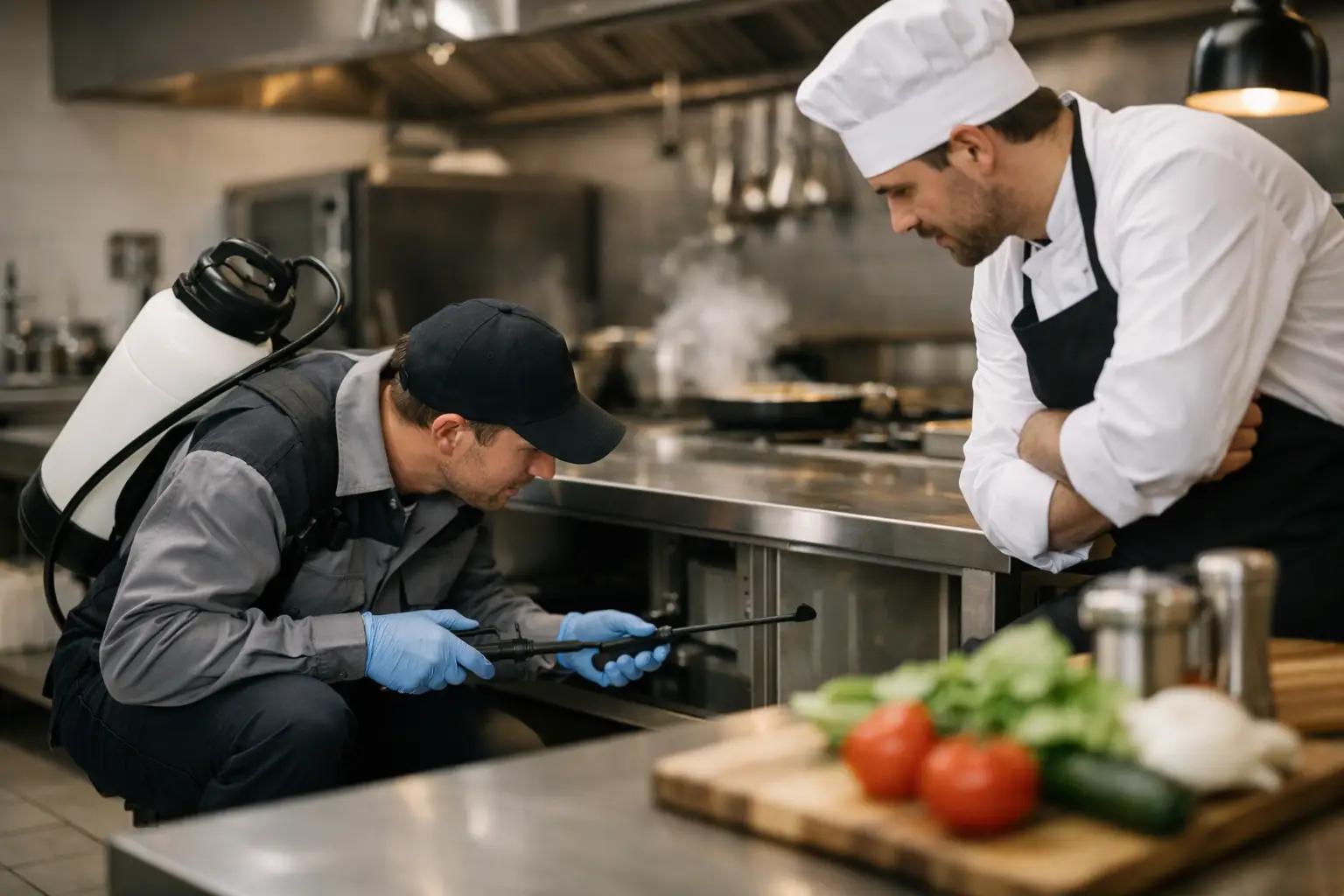
A restaurant pest prevention plan is not a spray schedule kept in a binder for inspection day. It is a working food-safety system that protects ingredients, equipment, employees, guests, and your reputation every day the kitchen is open. One mouse sighting, drain fly outbreak, or cockroach activity behind a prep line can quickly become a sanitation concern, a failed inspection, or a customer complaint.
The best plans focus on prevention first, rapid correction when activity appears, and clear documentation throughout. For restaurant operators, that means pest control must be coordinated with cleaning, receiving, maintenance, waste handling, and staff training. A treatment alone may reduce visible pests, but it will not solve the conditions that allow pests to return.
What a Restaurant Pest Prevention Plan Should Cover
Every restaurant has different risk points. A full-service dining room, a high-volume quick-service kitchen, a bakery, and a multi-location commissary do not face the same pest pressures. Still, an effective plan starts with a detailed inspection of the building, food flow, sanitation routines, and exterior conditions.
A pest management professional should identify active pests, likely entry points, food and water sources, harborage areas, and operational practices that create risk. In Ohio, seasonal changes can increase rodent pressure in fall and winter, while warmer months often bring heightened fly, ant, and stinging insect activity. Restaurants near dumpsters, shared retail spaces, older utility corridors, or dense urban areas may require more frequent monitoring.
Your written plan should define the pests of concern, scheduled service frequency, inspection locations, monitoring devices, corrective actions, and who is responsible for each task. It should also establish how managers report sightings and how quickly pest activity receives attention.
Start With Exclusion, Not Chemicals
Pests enter where a building gives them an opening. Exterior doors that do not close tightly, damaged sweeps, gaps around utility lines, torn screens, cracked foundations, and unsealed roof penetrations all create access points. Mice can enter through openings much smaller than most managers expect, and cockroaches can move through wall voids, plumbing penetrations, and deliveries.
A prevention plan should include regular building-condition checks. Door sweeps, weather stripping, screens, loading docks, vents, floor drains, pipe gaps, and wall junctions deserve attention. This work often falls between maintenance and operations, which is why clear ownership matters. If no one is assigned to correct an issue, it can remain open long after a technician documents it.
Exclusion is one of the most valuable long-term investments a restaurant can make. It reduces dependence on treatment products and makes future pest activity easier to control. However, exclusion must be practical. A busy receiving door may need operational changes, such as limiting how long it remains open, in addition to physical repairs.
Control Food, Moisture, and Waste
Pests stay where food, water, and shelter are reliable. Clean-looking facilities can still have hidden pest conditions if grease accumulates under equipment, dry goods are stored in torn bags, drains hold organic buildup, or dumpsters overflow.
Food should be stored in sealed, pest-resistant containers whenever possible and kept off the floor with enough clearance for inspection and cleaning. Deliveries should be checked before they enter storage areas, particularly corrugated boxes, produce shipments, and bulk dry goods. Stored product pests can arrive with food products, while cockroaches may be introduced through boxes, equipment, or neighboring spaces.
Moisture management is equally critical. Repair leaking faucets, dish machines, ice machines, refrigeration lines, and plumbing connections promptly. Clean floor drains using procedures appropriate for food facilities, and address the organic film that supports drain flies and fruit flies. Simply pouring a chemical product into a drain may not remove the buildup where flies breed.
Waste areas require daily discipline. Keep dumpster lids closed, clean spills around compactors, remove standing water, and avoid allowing waste to collect near doors. Indoor trash containers should be emptied on schedule and cleaned often enough to prevent residue and odors. If a waste enclosure is poorly maintained, it can become a pest source that affects the entire property.
Build Daily Prevention Into Restaurant Operations
A plan succeeds when employees can follow it during a real lunch rush, not only during an audit. Managers should give staff a simple process for reporting signs such as droppings, gnaw marks, insects near food storage, unusual odors, damaged packaging, or bird activity around entrances.
Train employees not to dismiss one sighting as insignificant. A single cockroach, rodent dropping, or cluster of small flies can signal a larger issue nearby. At the same time, staff should not attempt unapproved treatments near food, utensils, or prep areas. Aerosol products and misplaced traps can create contamination risks and complicate professional service.
Daily closing procedures should include cleaning under and behind movable equipment, removing food debris, wiping beverage stations, checking floor drains, and taking out trash. Weekly routines can cover deeper cleaning, storage rotation, inspection of dry goods, and review of exterior conditions. The exact schedule depends on your menu, hours, layout, and pest history, but consistency is nonnegotiable.
For multi-unit operators, standardizing these routines across locations creates a clearer baseline. One restaurant may need additional fly work because of its bar program, while another may need stronger rodent exclusion near a loading dock. The core standards should remain consistent, while service adjustments reflect each site’s risk.
Use Monitoring and Documentation to Stay Audit-Ready
Professional pest control in a restaurant should provide more than a service ticket. Monitoring devices, inspection findings, trend data, treatment records, and corrective-action notes give management a defensible record of control efforts.
Technicians may use tamper-resistant exterior bait stations, interior mechanical traps, insect monitors, fly-light units, and targeted tools based on the pest and the facility. Device placement matters. For example, fly-light units should be positioned to capture flies without drawing them toward food preparation or customer areas. Rodent devices must be secured, mapped, inspected, and maintained according to the facility’s needs.
Documentation should show what was found, where it was found, what action was taken, and what follow-up remains open. If recurring activity appears near a back door or dish area, the record should help management spot the pattern and correct the contributing condition. Repeated treatments without corrective action are not prevention.
Keep pest-management records accessible for health inspections, third-party audits, franchise reviews, and internal food-safety checks. A strong file typically includes service reports, device maps, safety information for products used, inspection notes, trend reports, and maintenance follow-up. Your requirements may vary based on your brand standards, local regulations, and customer audit expectations.
Know When to Escalate a Pest Problem
Some pest issues need immediate professional attention. Rodent activity in a food-storage area, cockroach sightings during service, bird nesting near ventilation equipment, or flies concentrated around drains should not wait for the next routine visit. Fast response limits disruption and gives your team a better chance to address the source before activity spreads.
The right response depends on the pest. A fruit fly issue may require drain cleaning, beverage-station sanitation, and produce-management changes. Rodent control may require urgent exclusion work, sanitation corrections, and intensified trapping. Cockroach control often requires targeted treatment, detailed crack-and-crevice inspection, elimination of moisture sources, and cooperation from adjacent tenants in shared buildings.
Avoid choosing a provider solely on the lowest service price. Restaurant pest management requires trained technicians, food-facility awareness, dependable reporting, and the ability to respond when conditions change. A provider should explain the findings clearly, recommend practical corrections, and work with your operation rather than treating the restaurant like a generic commercial account.
Apex Pest Control builds customized commercial pest programs around prevention, inspection support, and responsive treatment. For restaurants, the goal is straightforward: protect the food, protect the facility, and prevent a small pest concern from becoming a business-threatening event.
A well-managed restaurant should not have to hope pests stay away. With disciplined sanitation, building maintenance, employee reporting, professional monitoring, and documented follow-through, pest prevention becomes part of the operation that protects every shift.