



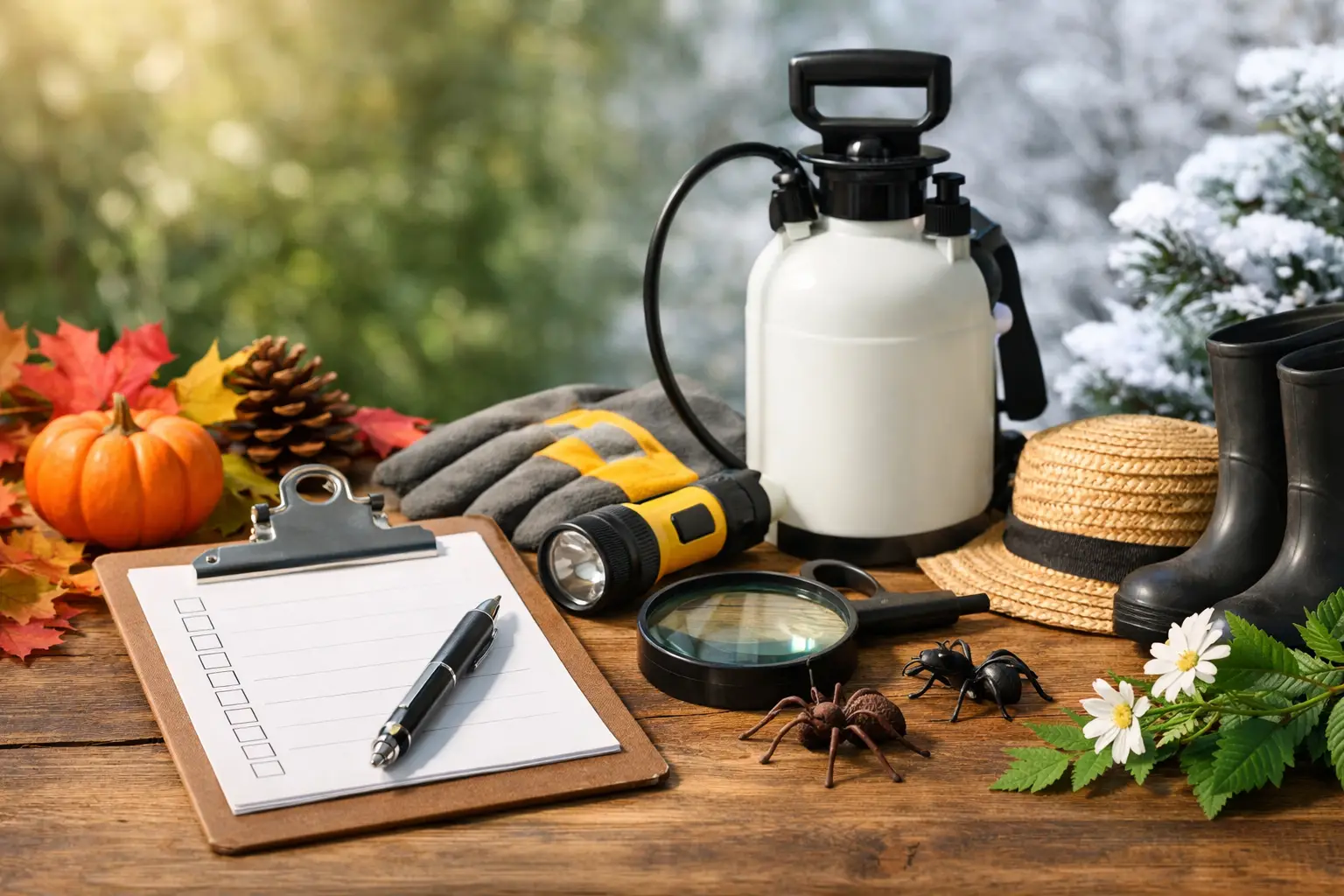
A pest problem rarely starts with a dramatic infestation. More often, it starts with one gap under a door, one damp crawl space, or one missed inspection around a dumpster pad. A solid seasonal pest prevention checklist helps homeowners and property managers catch those conditions early, before ants, rodents, termites, mosquitoes, or stinging insects turn into a bigger and more expensive issue.
For Ohio properties, timing matters. Shifts in temperature, rainfall, and building use change pest pressure throughout the year. The right plan is not just about reacting when pests appear. It is about inspecting, correcting, and protecting the conditions that attract them in the first place.
Why a seasonal pest prevention checklist works
Pests do not behave the same way in April as they do in January. Rodents look for shelter when temperatures drop. Ants become more active as the weather warms. Mosquitoes surge when standing water and humidity increase. Termites may stay hidden, but spring swarming can reveal activity that has been building for months.
That is why prevention works best on a schedule. A seasonal approach gives you a repeatable system for checking entry points, moisture issues, sanitation risks, and outdoor conditions before activity spikes. For commercial facilities, it also supports better documentation, cleaner inspections, and fewer disruptions to operations.
Spring seasonal pest prevention checklist
Spring is when many pest issues become visible. It is also the time when small exterior problems begin to create interior pest pressure.
Start with the outside of the building. Walk the full perimeter and look for cracked foundation areas, damaged screens, loose siding, and gaps around utility penetrations. Pay close attention to door sweeps and weather stripping. Small openings are enough for ants, spiders, and mice to get inside.
Next, address moisture. Clean gutters, extend downspouts away from the structure, and correct low spots where water collects near the foundation. Standing water supports mosquito breeding, while persistent moisture around wood can attract termites and other wood-destroying pests. If your property has crawl spaces or basements, inspect for damp insulation, condensation, and poor ventilation.
Spring is also the right time to trim back landscaping. Bushes and tree branches that touch the structure create pest highways. Mulch should not be piled too high against the foundation, and firewood should be stored away from the building. These details matter because they reduce harborage for ants, rodents, earwigs, and occasional invaders.
Inside, inspect kitchens, utility rooms, and storage areas for signs of activity. Look for droppings, gnaw marks, grease trails, damaged food packaging, and insect sightings around plumbing lines. In commercial settings, this is the season to review sanitation schedules, floor drain cleaning, and receiving procedures.
Summer seasonal pest prevention checklist
Summer brings peak activity for many insects. Warm weather, open doors, outdoor food service, and higher humidity all increase risk.
Your summer seasonal pest prevention checklist should focus heavily on exclusion and outdoor management. Screen doors and windows should be intact and tightly fitted. Exterior doors should close properly without visible light underneath. If a facility has loading docks, service entrances, or trash enclosures, those areas need consistent attention because pest activity often starts there.
Mosquito prevention becomes especially important in summer. Remove standing water from buckets, planters, tarps, toys, clogged drains, and low areas in the yard. Birdbaths and decorative water features need regular maintenance. For commercial sites, inspect roof drains, catch basins, and any equipment areas where water can collect unnoticed.
Stinging insects also become more aggressive as colonies develop. Watch for wasp and hornet nesting under eaves, around signage, near rooflines, and inside wall voids. Early treatment is safer and more effective than waiting until nests are fully established.
Summer is also prime time for ants. Crumbs under appliances, sugary spills, and pet food left out overnight can sustain an indoor ant trail. It depends on the species, but many ant problems are made worse by partial DIY treatments that scatter colonies instead of eliminating them. If activity is persistent, professional identification and treatment usually save time and frustration.
Fall seasonal pest prevention checklist
Fall is when pests begin shifting from outdoor survival to indoor shelter. This is one of the most important prevention windows of the year.
Start with a second full perimeter inspection. Seal cracks, replace worn sweeps, repair vent screens, and close gaps around pipes and conduits. Rodents can enter through surprisingly small openings, and once they settle into wall voids, attics, or storage areas, they are harder to remove.
Pay attention to food and clutter. In homes, that means storing pantry goods in sealed containers, vacuuming behind appliances, and reducing cardboard accumulation in garages and basements. In commercial spaces, it means tightening inventory rotation, checking for spilled dry goods, and keeping storage at least several inches off the floor where possible.
Leaf buildup should also be removed from foundations, rooflines, and exterior corners. Decaying organic matter holds moisture and creates cover for pests. If your property includes sheds or detached structures, inspect those as carefully as the main building. Rodents and overwintering insects often start there before moving inward.
Fall is also a good time to inspect attic spaces. Look for gaps at roof intersections, damaged vents, nesting material, or signs of wildlife activity. Bats, birds, squirrels, and mice often exploit upper-entry points that are easy to miss during a ground-level inspection.
Winter seasonal pest prevention checklist
Winter does not mean pests disappear. It means the pressure changes. Indoor warmth, available food, and hidden voids become the main attractors.
During winter, focus on interior monitoring and moisture control. Check under sinks, around water heaters, near floor drains, and in utility closets for leaks or condensation. Cockroaches, rodents, and stored product pests can remain active indoors all winter if conditions support them.
This is also the time to inspect less-trafficked areas. Mechanical rooms, janitorial closets, basements, attics, and long-term storage spaces can hide pest activity for weeks. For businesses, winter is a smart season to review service logs, incident reports, and recurring problem areas so the next year’s plan can be adjusted.
If holiday decorations, seasonal inventory, or stored materials are brought in from attics, garages, or off-site warehouses, inspect them before they enter occupied areas. Rodents and insects often hitchhike in boxes, fabric bins, and palletized goods.
Where prevention plans often fail
Most prevention plans do not fail because people ignore pests. They fail because one part of the property is managed well while another is neglected. A clean kitchen will not solve a gap under a rear door. A sealed foundation will not offset standing water behind the building. Prevention works when sanitation, maintenance, moisture control, and monitoring are treated as one system.
There is also a difference between low-level activity and a true source problem. A few occasional invaders after a heavy rain may not indicate a major infestation. Repeated sightings, droppings, structural damage, or pest activity across multiple areas usually mean the issue is established and needs professional treatment.
Residential and commercial needs are not identical
For homeowners, the goal is usually comfort, safety, and protecting the home from damage. Families want fast relief, but they also want treatments that are applied responsibly around children and pets. That means prevention should be practical and consistent, not overly complicated.
For commercial properties, the stakes are broader. Pest activity can affect inspections, tenant satisfaction, inventory protection, and brand reputation. Food facilities, warehouses, offices, healthcare sites, and multi-unit properties each have different pressure points. A one-size-fits-all program rarely works well. The stronger approach is a customized service plan with documented inspections, targeted treatments, and corrective recommendations tied to the site.
When to bring in a professional
If you are seeing repeated rodent activity, termite evidence, bed bug signs, nesting stinging insects, or any pest issue that keeps returning after basic corrections, it is time for an expert inspection. The same applies when activity is affecting multiple units, multiple rooms, or sensitive commercial areas.
A professional can identify the pest correctly, determine how it is entering, and build a treatment plan that goes beyond surface-level results. That may include exclusion work, habitat reduction, monitoring, scheduled service, or specialized treatment for a specific pest. For Ohio properties dealing with changing seasonal pressure, that kind of structured prevention is often the difference between short-term relief and lasting control.
The best checklist is the one that gets used. If you build seasonal inspections into your routine and act on what you find, you can stop many pest problems before they disrupt your home, your operations, or your peace of mind.