




TL;DR:
- Understanding Ohio’s common ant species and their distinctive behaviors is crucial for effective control and prevention.
- Targeted baiting based on species identification and patience in treatment significantly improve long-term results.
Types of ant infestations refer to the distinct ant species that invade Ohio homes, each requiring a different identification approach and control strategy to eliminate effectively. In Solon, Ohio, where older ranch-style homes and wooded lots create ideal conditions for multiple ant species, homeowners regularly encounter odorous house ants, carpenter ants, pavement ants, fire ants, pharaoh ants, and Argentine ants. Knowing which species you are dealing with is the single most important step before choosing any treatment. The common ant species in Ohio each leave different signs, cause different damage, and respond to different control methods.
1. Types of ant infestations common in Ohio homes
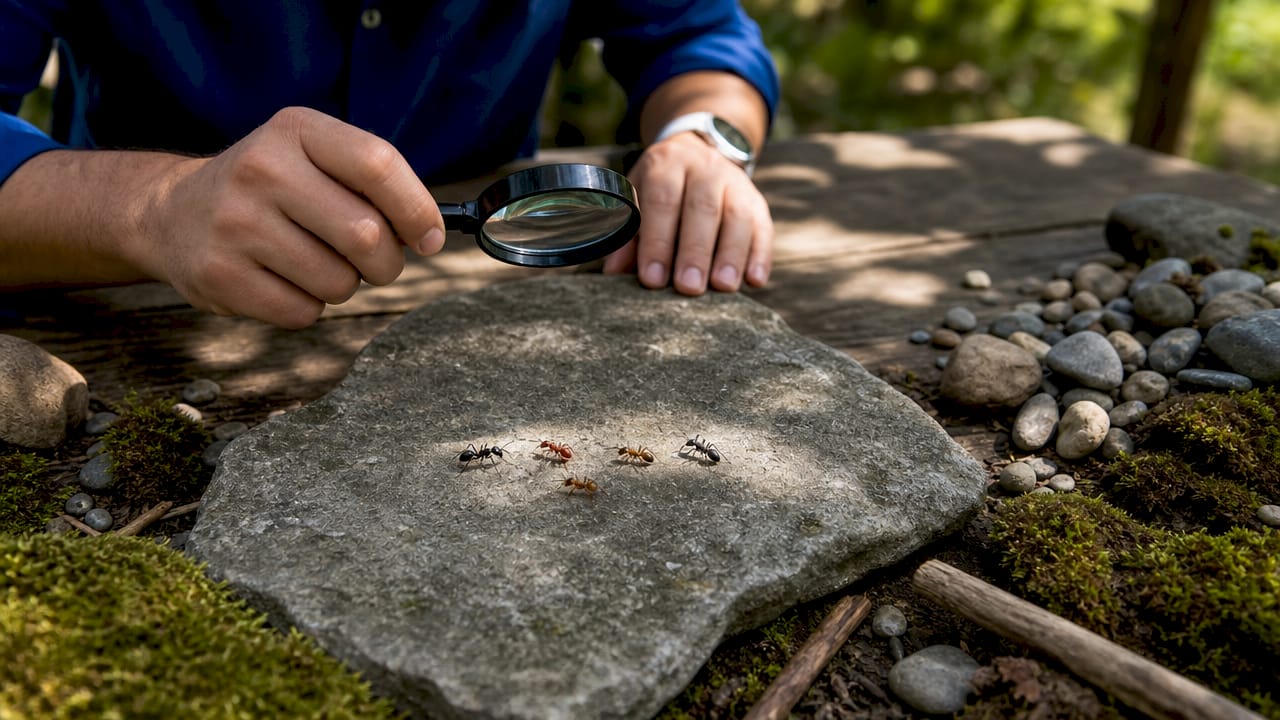
Ohio homes host six ant species that account for the vast majority of residential infestations. The four most common U.S. household ants are odorous house ants, pavement ants, Argentine ants, and little black ants, each identifiable by distinct traits. In Solon specifically, carpenter ants and pharaoh ants round out the list due to the area’s mix of mature trees, older housing stock, and multi-unit properties near SOM Center Road.
Here is how each species looks and behaves:
- Odorous house ants are 1/16 to 1/8 inch long, dark brown to black, and emit a rotten coconut smell when crushed. They nest in wall voids, under floors, and near moisture sources. They prefer sweets and will trail along baseboards and countertops.
- Pavement ants are about 1/8 inch long, dark brown, and nest under sidewalks, driveways, and concrete slabs. Indoors, you will find them near foundations and in basement walls. They eat almost anything, including grease and sweets.
- Carpenter ants are Ohio’s largest common ant at 1/4 to 1/2 inch. They are black or bicolored red and black. They do not eat wood. They tunnel through it to build galleries, leaving behind coarse sawdust called frass. They are strongly associated with moisture-damaged wood.
- Fire ants are reddish-brown, 1/8 to 3/8 inch, and build dome-shaped mounds in sunny outdoor areas. They deliver a painful, burning sting and are increasingly found in southern Ohio, with isolated populations moving north.
- Pharaoh ants are tiny at 1/16 inch, pale yellow to light brown, and nest almost exclusively indoors. They thrive in heated buildings, making them a persistent problem in apartment complexes and older homes near Solon’s Aurora Road corridor.
- Argentine ants are 1/16 to 1/8 inch, light to dark brown, and form massive supercolonies that can span entire neighborhoods. They have no defined mound and trail in long, distinct lines along foundations and landscaping edges.
2. How different ant species damage Ohio homes and property
Not every ant infestation carries the same risk. Some species are nuisance pests. Others cause structural damage or create genuine health hazards.
Carpenter ants are the most structurally destructive species on this list. Carpenter ant infestations signal moisture or structural damage, and eradication requires moisture correction beyond pesticide application alone. In Solon homes with aging wood decks, leaky gutters, or basement moisture issues, carpenter ants can hollow out load-bearing beams over several years without obvious surface signs.
Fire ants present a medical risk that most Ohio homeowners underestimate. A single disturbed mound can produce hundreds of simultaneous stings, triggering anaphylactic reactions in sensitive individuals. Children and pets are at highest risk in yards where mounds are not immediately visible.
Pharaoh ants are the most difficult indoor species to control. They nest inside wall voids, electrical outlets, and even medical equipment in healthcare settings. Their colonies contain multiple queens, so a single misapplied spray can split one colony into several, spreading the infestation to new areas of the home.
Argentine ant supercolonies spread faster than any other species on this list. A colony that starts at one property edge can extend to neighboring yards within a single season, making individual household treatment insufficient without neighborhood-wide coordination.
Odorous house ants and pavement ants are primarily nuisance pests, but their large colony sizes mean a minor kitchen trail can represent thousands of workers with nests hidden deep in wall voids or under the foundation slab.
3. How to identify ant infestation signs before they spread
Catching an ant infestation early cuts treatment time and cost significantly. Each species leaves specific physical clues that make identifying ant types possible without professional equipment.
The rotten coconut smell when you crush a small dark ant is the definitive sign of odorous house ants. No other Ohio species produces this odor. Pavement ants leave small dirt mounds between concrete cracks in driveways and along garage floors. Carpenter ants leave coarse, fibrous frass that looks like pencil shavings near baseboards, window frames, or structural beams. Fire ant mounds are dome-shaped, appear in open sunny soil, and have no visible entry hole at the top. Pharaoh ants trail in thin, fast-moving lines near heat sources like water heaters and refrigerator motors. Argentine ants form wide, dense trails along exterior foundation walls, often visible in the early morning.
Pro Tip: If you see winged ants indoors in late spring, that is a swarm event indicating a mature, established colony nearby. Winged ants are reproductives, not a separate species, and their presence means the colony has been active for at least one to three years.
4. Effective DIY ant control methods matched to species
Matching your treatment to the species is the most common point where DIY ant control fails. Sugar-based baits fail on protein-loving ants, causing homeowners to conclude bait does not work when the product simply does not match the species’ feeding preference.
Follow this species-matched approach:
- Odorous house ants and Argentine ants: Use sweet liquid baits like Terro or similar borax-based gel products. Place bait directly on active trails without disturbing the trail. Do not spray near bait stations.
- Carpenter ants: Use protein-based baits combined with moisture correction. Products containing abamectin or fipronil in a protein matrix work well. Address the moisture source first or the colony will rebuild.
- Pavement ants: Both sweet and protein baits work depending on the season. In spring, pavement ants prefer protein. In summer, they shift to sweets. Rotate bait types if the first placement is ignored after 48 hours.
- Pharaoh ants: Never spray. Spraying visible ants causes colony splitting, which worsens pharaoh ant infestations dramatically. Use only slow-acting sweet gel baits placed in multiple locations simultaneously.
- Fire ants: Treat individual mounds with granular bait products containing spinosad or hydramethylnon. Apply in the early morning or evening when ants are foraging. Do not disturb the mound before or during treatment.
A 14-day integrated approach using slow-acting baits followed by perimeter sprays achieves above 90% success in colony elimination. Visible trail reduction starts between days 3 and 5, with full elimination by day 10 to 14. If you see increased activity at bait stations in the first 48 hours, that is a sign the bait is working. Ants are recruiting nestmates to the food source, which is exactly what you want for colony-wide elimination.
Cleaning pheromone trails with soap and water disorients ants and resets foraging paths, which makes bait placement more effective. Do this after placing bait, not before, so ants are redirected toward the bait rather than back to their original food source.
5. Long-term prevention strategies for Ohio homes
Preventing ant infestations long term requires physical exclusion, moisture management, and sanitation working together. Physical exclusion such as sealing cracks and storing food in sealed containers is the foundation of any lasting ant control program.
The table below compares the most effective prevention measures by effort level and impact:
| Prevention method | Effort level | Primary species targeted | Impact |
|---|---|---|---|
| Seal foundation cracks and gaps around pipes | Medium | All species | High |
| Fix leaking gutters and reduce wood moisture | Medium | Carpenter ants | High |
| Store food in airtight containers | Low | Odorous house, pavement, pharaoh | High |
| Trim trees and shrubs away from the home | Low | Carpenter ants, Argentine ants | Medium |
| Coordinate bait treatment with neighbors | High | Argentine ants | High |
| Replace moisture-damaged wood | High | Carpenter ants | High |
Ohio’s climate adds a seasonal layer to ant prevention. Ant activity surges in Solon from late April through June as soil temperatures rise and colonies expand. This is the window when ant infestation triggers are highest and exclusion work delivers the most return. Sealing entry points in March, before the spring surge, is more effective than reacting after trails appear indoors.
For Argentine ant supercolonies, individual household treatment is rarely sufficient. Coordinating bait placement with two or three neighboring properties at the same time disrupts the supercolony’s foraging network across a wider area and prevents re-colonization from adjacent nests.
The role of exclusion in pest management goes beyond ants. Homes that seal entry points, manage moisture, and maintain cleanliness see significantly lower overall pest pressure across multiple species year over year.
Key takeaways
Effective ant control in Ohio depends on correctly identifying the species first, then applying a matched treatment strategy that targets the colony rather than visible workers.
| Point | Details |
|---|---|
| Species identification comes first | Each Ohio ant species requires a different bait type, placement strategy, and control method. |
| Never spray pharaoh or Argentine ants | Contact sprays cause colony splitting, turning one infestation into several. |
| Carpenter ants signal moisture damage | Pesticide alone will not solve a carpenter ant problem without fixing the moisture source. |
| Slow-acting baits outperform sprays | A 14-day bait program achieves above 90% colony elimination versus surface sprays that kill only foragers. |
| Seasonal timing matters in Ohio | Exclusion work completed in March before the spring surge delivers the highest prevention return. |
What I have learned after years of watching Ohio homeowners fight ants
After seeing hundreds of ant situations across Solon, Bedford Heights, and the surrounding communities, the pattern is always the same. Homeowners reach for a can of spray, kill the ants they can see, and feel like the problem is solved. Three weeks later, the trails are back, often in a different room. Contact sprays kill foragers but cause colony budding, and the colony simply relocates deeper into the structure.
The homeowners who actually solve their ant problems do two things differently. They match the bait to the species, and they leave it alone long enough to work. Ants may ignore new bait for 24 to 48 hours while they assess it as a food source. Most people pull the bait after a day and conclude it failed. That is the exact moment when patience would have paid off.
The other thing I consistently see overlooked is the structural side of carpenter ant problems. You can treat a carpenter ant colony successfully and have a new one move in within a season if the moisture-damaged wood is still there. The pest is a symptom. The wet wood is the cause. Any treatment plan that does not include a moisture inspection is incomplete.
Simple sanitation and persistence often outperform professional-grade chemicals when homeowners commit to the process. Clean up food sources, wipe down trails with soapy water, place the right bait, and wait. That combination resolves the majority of odorous house ant and pavement ant problems without a service call. For carpenter ants, pharaoh ants, and Argentine supercolonies, professional intervention is worth it because the margin for error on those species is much smaller.
— Dushan
Professional ant control for Ohio homeowners
When DIY methods have not resolved the infestation, or when you are dealing with carpenter ants, pharaoh ants, or a spreading Argentine ant colony, professional treatment makes a measurable difference. Apexpestcontrol has served Ohio homeowners since 1969, and the team brings species-specific identification and targeted treatment plans to every job. The approach follows integrated pest management steps that combine baiting, exclusion, and moisture assessment rather than relying on broad chemical application. Apexpestcontrol also offers organic pest control options for homeowners who want effective treatment with reduced chemical exposure. Contact Apexpestcontrol at 1-800-684-2284 for a free estimate and a treatment plan built around your specific ant species and home.
FAQ
What are the most common ant species in Ohio homes?
Odorous house ants, pavement ants, and carpenter ants are the most frequently encountered species in Ohio residential properties. Argentine ants and pharaoh ants are less common but significantly harder to control once established indoors.
How do I know if I have carpenter ants or termites?
Carpenter ants leave coarse, fibrous frass that looks like sawdust near damaged wood, while termites leave fine, pellet-like droppings and mud tubes. Carpenter ants also have a pinched waist and bent antennae, which termites lack.
Why do ants keep coming back after I spray them?
Spraying visible ants kills only foragers, not the queen or the colony. The colony simply sends new foragers, and in species like pharaoh ants, spraying can split the colony into multiple new nests in different areas of the home.
What is the fastest way to get rid of ants indoors?
A slow-acting bait matched to the species’ feeding preference is the most effective method. Visible trail reduction begins within three to five days, and full colony elimination typically occurs within 10 to 14 days using a bait-first approach.
When should I call a professional exterminator for ants in Ohio?
Call a professional when you identify carpenter ants with associated wood damage, pharaoh ants in a multi-unit building, or Argentine ants that have spread across multiple areas of the property. These species carry a high risk of worsening with incorrect DIY treatment.