



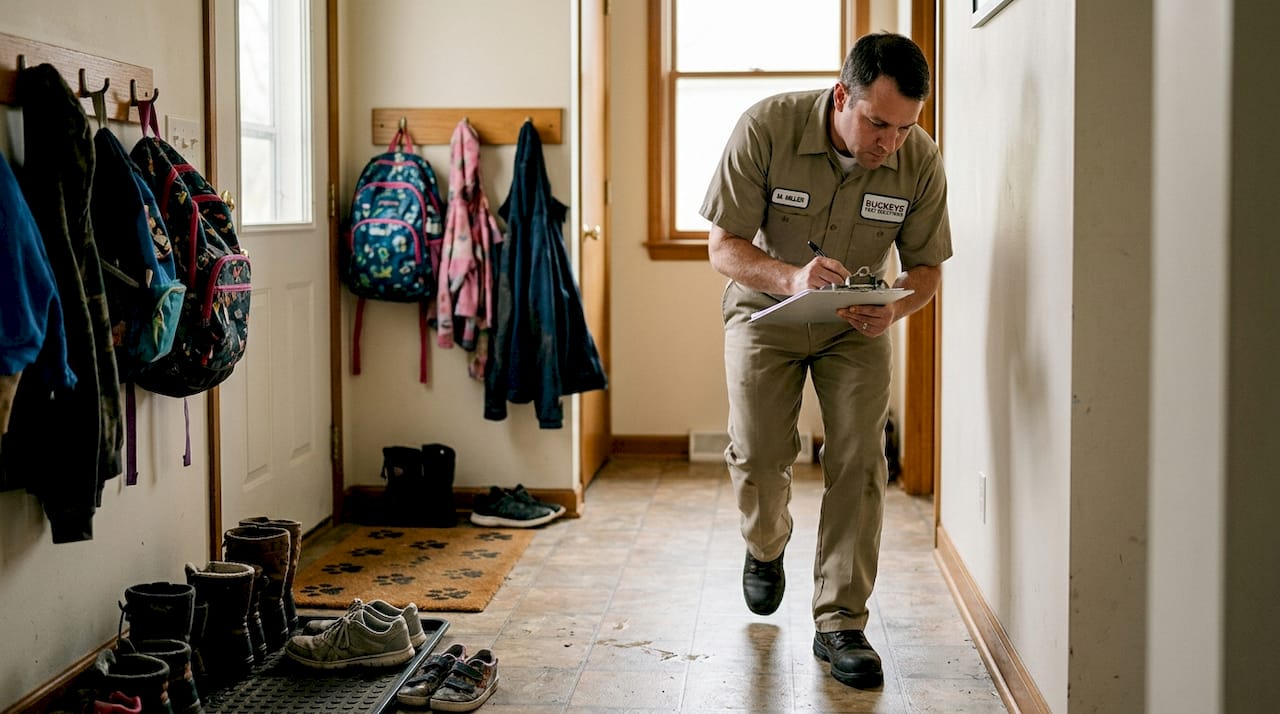
Most homeowners believe pest control begins and ends with spraying for bugs or setting traps. That’s a costly misconception. Real pest management starts with understanding what’s happening on your property before problems spiral out of control. A pest audit is a structured evaluation that examines your home’s vulnerabilities, documents pest activity, and identifies risks before they become expensive disasters. For Northeast Ohio homeowners and property managers dealing with termites, carpenter ants, and moisture-driven infestations, knowing what a pest audit involves and why it matters can save thousands in repairs and protect your investment. This guide breaks down exactly what pest audits are, how they differ from inspections, and why they’re essential for Ohio properties.
Table of Contents
- Key takeaways
- What is a pest audit and how does it work?
- Pest audits versus pest inspections: what Northeast Ohio homeowners should know
- Why regular pest audits matter for Northeast Ohio homeowners and property managers
- Best practices and tips for preparing and using pest audits effectively
- Explore top pest control solutions and experts in Northeast Ohio
- Frequently asked questions about pest audits
Key Takeaways
| Point | Details |
|---|---|
| Proactive pest audits | A pest audit is a proactive, structured evaluation that identifies vulnerabilities, documents pest activity, and prioritizes prevention before problems escalate. |
| Audits versus inspections | In Northeast Ohio, audits evaluate prevention effectiveness and compliance, whereas inspections diagnose active infestations and damage using standard forms. |
| Licensed professionals and records | A licensed technician conducts the audit, reviews existing treatment records, and delivers a prioritized prevention and monitoring plan. |
| Regional risk focus | The audit emphasizes foundation entry points, moisture sources, sanitation practices, and landscaping conditions common to Northeast Ohio properties. |
What is a pest audit and how does it work?
A pest audit is a structured review and evaluation of a property’s pest management program, including site inspection, documentation, and pest trend analysis. Unlike a reactive treatment call when you spot a mouse or ant trail, audits are proactive. They assess whether your current prevention efforts are working, identify conditions that attract pests, and document findings for compliance or future reference.
Pest audits involve several key steps. First, a licensed technician conducts a thorough site inspection, examining both interior and exterior areas for signs of pest activity, entry points, and conducive conditions like standing water or wood-to-soil contact. Second, they review any existing pest control documentation, treatment records, and maintenance logs to spot patterns or gaps. Third, they perform a risk assessment, evaluating structural vulnerabilities, sanitation practices, and environmental factors specific to your property. Finally, they provide a detailed report with prioritized recommendations for prevention, exclusion, and ongoing monitoring.
This isn’t a casual walkthrough. Professional audits follow systematic checklists covering critical areas. For regular pest inspections in Northeast Ohio, auditors focus on:
- Foundation cracks, gaps around utility penetrations, and damaged weatherstripping that allow pest entry
- Moisture sources including leaky pipes, poor drainage, damp basements, and condensation issues common in Ohio’s humid climate
- Food storage practices, garbage management, and clutter that provide harborage for rodents and insects
- Landscaping issues like mulch piled against siding, overgrown vegetation touching structures, and wood debris near foundations
- Previous treatment effectiveness and whether pest populations are declining, stable, or increasing
The goal is comprehensive risk evaluation, not just finding active infestations. Audits identify problems before they escalate, making them essential for property managers overseeing multiple units and homeowners protecting their biggest investment.
Pest audits versus pest inspections: what Northeast Ohio homeowners should know
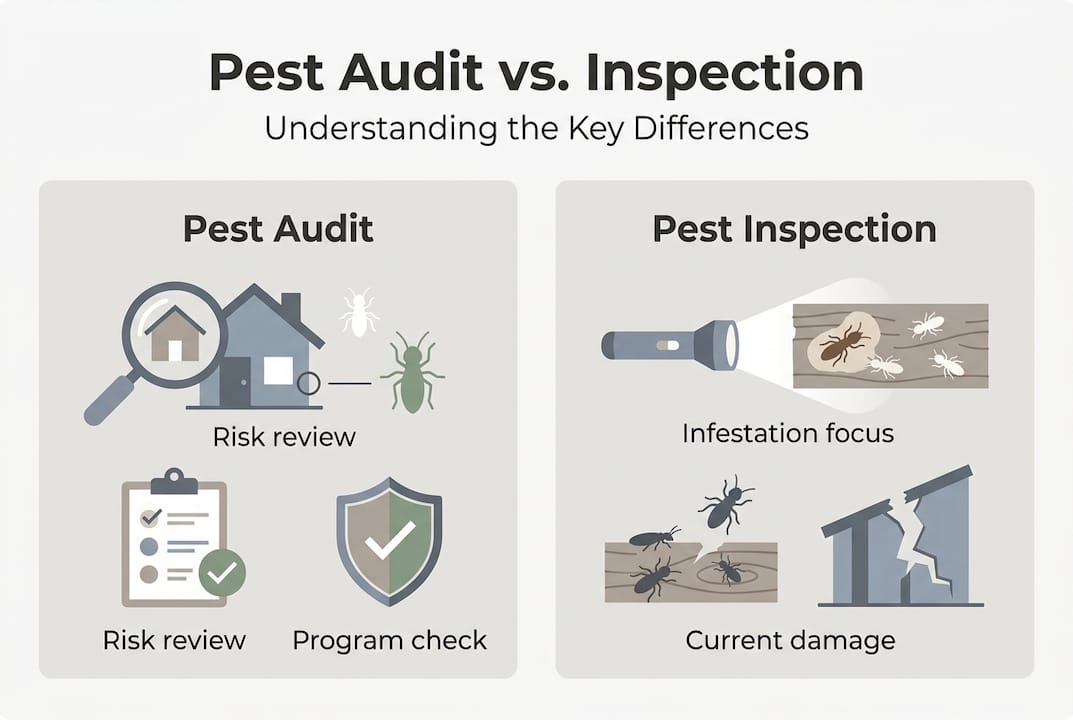
Many people use “audit” and “inspection” interchangeably, but they serve different purposes. A pest inspection is diagnostic, focused on detecting active infestations and damage. An audit is compliance-focused, evaluating your entire pest management approach and whether it meets standards. In Northeast Ohio, this distinction matters because of regional pest pressures and real estate requirements.
Pest inspections typically focus on accessible areas and document infestation evidence with standard forms. For example, WDI (Wood Destroying Insect) or WDO (Wood Destroying Organism) inspections are required for most home sales in Ohio. These inspections specifically look for subterranean termites, carpenter ants, powderpost beetles, and wood decay fungi, all common in Northeast Ohio’s climate. Inspectors use standardized forms like NPMA-33 or NPCA-99 to document findings for lenders and buyers.
Audits go further. They examine whether your prevention program is working, review treatment histories, assess environmental risks, and provide ongoing monitoring recommendations. Here’s how they compare:

| Feature | Pest Inspection | Pest Audit |
|---|---|---|
| Primary Purpose | Detect active infestations and damage | Evaluate entire pest management program |
| Timing | One-time or as-needed (e.g., home sales) | Recurring (annual, quarterly, monthly) |
| Documentation | Standardized forms (NPMA-33, NPCA-99) | Comprehensive reports with trend analysis |
| Scope | Accessible areas only | Accessible areas plus documentation review |
| Common Use | Real estate transactions, damage claims | Property management, compliance, prevention |
| Cost Focus | Immediate treatment needs | Long-term risk reduction |
Northeast Ohio homeowners should understand regional pest threats when considering audits versus inspections. Subterranean termites thrive in Ohio’s moist soil conditions, making moisture control and foundation monitoring critical. Carpenter ants nest in damp, decaying wood, often entering through roof leaks or poorly maintained siding. Both pests cause significant structural damage if undetected.
Inspections have limits. Inspectors can’t access areas behind walls, under concrete slabs, or in sealed crawlspaces without invasive methods. They document visible evidence but may miss early-stage infestations. Audits address this by reviewing treatment records, moisture readings, and maintenance logs to identify patterns suggesting hidden problems. For anyone serious about termite inspection in Ohio or understanding pest infestation basics, audits provide the bigger picture inspections alone can’t deliver.
Key pests audits target in Northeast Ohio include:
- Subterranean termites requiring soil treatments and moisture control
- Carpenter ants exploiting water-damaged wood and roof leaks
- Pavement ants entering through foundation cracks and expansion joints
- House mice seeking warmth and food in fall and winter months
- Bed bugs in multi-unit properties requiring documentation and follow-up protocols
Why regular pest audits matter for Northeast Ohio homeowners and property managers
Pest audits aren’t optional luxuries. They’re risk management tools that prevent expensive damage, legal liability, and compliance headaches. For homeowners, audits catch termite activity before colonies destroy floor joists or wall studs. For property managers, they document due diligence, protecting against tenant lawsuits and lease violations.
Monthly checklists and annual professional audits help property managers prevent liability and pest damage, emphasizing moisture control in NE Ohio’s climate. Ohio’s humid summers and freeze-thaw cycles create ideal conditions for moisture intrusion. Basements develop condensation, crawlspaces trap humidity, and poor grading directs water toward foundations. These conditions attract termites, carpenter ants, and fungus that weakens wood, making moisture management a top audit priority.
Regular audits deliver measurable benefits. First, they identify conducive conditions before infestations establish. Catching a small carpenter ant colony costs hundreds to treat. Repairing structural damage from years of unchecked activity costs tens of thousands. Second, audits create documentation proving you maintained the property responsibly. If a tenant claims bed bugs or a buyer discovers termite damage post-sale, audit records demonstrate you took reasonable preventive steps. Third, audits improve treatment effectiveness by tracking pest trends over time, showing whether your current approach works or needs adjustment.
Recommended audit frequency depends on property type and risk level:
- Single-family homeowners: Annual professional audits, quarterly self-inspections using checklists
- Multi-unit property managers: Quarterly professional audits, monthly tenant area checks
- Commercial properties: Monthly or bi-monthly audits depending on industry regulations and pest pressure
- High-risk properties (near wooded areas, previous infestations): Quarterly professional audits minimum
For property managers handling pest control in Ohio, audits are non-negotiable. They satisfy lease obligations, meet health department standards, and provide evidence of proactive management if disputes arise. For homeowners investing in regular pest inspections in Northeast Ohio, audits extend protection beyond one-time checks, building a comprehensive defense against regional pest threats.
Pro Tip: Engage licensed pest control professionals for audits rather than attempting DIY evaluations. Ohio Department of Agriculture regulations require proper licensing for pest management activities, and professionals have training to spot subtle warning signs homeowners miss. Use audit checklists for pest control between professional visits to maintain vigilance, but don’t substitute self-inspections for expert audits.
Best practices and tips for preparing and using pest audits effectively
Getting maximum value from pest audits requires preparation and follow-through. Homeowners and property managers who treat audits as collaborative processes rather than pass/fail tests see better results and fewer recurring problems.
Start by preparing your property before the auditor arrives. Clear clutter from basements, attics, and crawlspaces so inspectors can access all areas. Move stored items away from walls to expose baseboards and corners where pests hide. Fix obvious issues like dripping faucets or torn screens before the audit, demonstrating you’re proactive about maintenance. Gather existing pest control records, treatment receipts, and any previous inspection reports so auditors can review your history and identify patterns.
Selecting qualified pest auditors matters. Use licensed professionals per Ohio Department of Agriculture and FIFRA regulations; DIY can support prevention but not replace professional audits. Verify the company holds current Ohio pest control licenses, carries liability insurance, and has experience with your property type. Ask about their audit process, what areas they cover, and whether they provide written reports with photos documenting findings. Avoid companies offering suspiciously cheap audits, they often rush through inspections or push unnecessary treatments to compensate for low audit fees.
Interpreting audit reports requires understanding priority levels. Most professional reports categorize findings as immediate concerns, moderate risks, and preventive recommendations. Immediate concerns include active infestations, structural damage, or conditions causing imminent harm. Address these first. Moderate risks are conducive conditions likely to cause problems within months, like moisture issues or small entry points. Schedule repairs within weeks. Preventive recommendations are best practices improving long-term protection, such as improved sanitation or landscaping adjustments. Implement these as budget and time allow.
Follow these steps to maximize audit effectiveness:
- Schedule audits during dry weather when basements and crawlspaces are accessible, avoiding spring flooding or winter ice that limits inspection scope
- Request detailed reports including photos, measurements, and specific locations of findings rather than vague summaries
- Prioritize moisture control recommendations first, as they address root causes attracting multiple pest species in Northeast Ohio
- Implement exclusion repairs (sealing cracks, installing door sweeps, screening vents) before relying solely on chemical treatments
- Establish a maintenance calendar based on audit recommendations, scheduling follow-up inspections and preventive tasks quarterly
- Keep audit records organized chronologically to track improvements, demonstrate compliance, and identify recurring problem areas
For ongoing success, integrate audit findings into regular property maintenance. If audits repeatedly flag the same issues (like basement moisture or landscaping problems), invest in permanent solutions rather than temporary fixes. Use audit checklists for pest control between professional visits to monitor conditions and catch new problems early. Train property management staff or household members to recognize warning signs auditors identify, creating a culture of vigilance.
Pro Tip: Use pest audits as ongoing risk management tools, not one-time compliance checks. Schedule audits at consistent intervals regardless of whether you see pest activity. Many serious infestations develop silently for months before becoming visible. Regular audits catch problems during early stages when treatment is simpler and less expensive. For property managers, consistent audit schedules also demonstrate systematic due diligence if legal disputes arise, providing stronger protection than sporadic reactive inspections.
Explore top pest control solutions and experts in Northeast Ohio
Understanding pest audits is the first step toward protecting your Northeast Ohio property. The next step is partnering with professionals who deliver thorough audits and effective solutions tailored to regional pest pressures. Apex Pest Control provides comprehensive pest audits, inspections, and treatments for homeowners and property managers throughout Oakwood, Bedford Heights, Maple Heights, Warrensville Heights, Solon, Avon, Sagamore Hills, and surrounding communities. Our licensed technicians specialize in termite inspections, carpenter ant control, rodent exclusion, and moisture management strategies critical for Ohio’s climate. Compare top residential pest solutions to find the right protection level for your property, or explore top local exterminators to see how Apex’s family-safe methods and 200+ five-star reviews set us apart. Ready to schedule your professional pest audit? Contact Apex Pest Control today to protect your investment with dependable, local expertise you can trust.
Frequently asked questions about pest audits
What areas are covered during a pest audit?
Professional pest audits examine all accessible interior and exterior areas including basements, crawlspaces, attics, kitchens, bathrooms, garages, foundations, rooflines, and landscaping within 10 feet of structures. Auditors focus on entry points, moisture sources, sanitation practices, and conducive conditions attracting pests. Inaccessible areas behind walls or under sealed slabs aren’t included without invasive methods.
How often should homeowners in Northeast Ohio schedule pest audits?
Homeowners should schedule professional pest audits annually, with quarterly self-inspections using checklists between professional visits. Properties with previous infestations, wooded surroundings, or moisture problems benefit from quarterly professional audits. Regular pest inspections in Northeast Ohio help catch termites, carpenter ants, and rodents before they cause expensive damage.
Can I perform a pest audit myself?
You can conduct basic self-inspections using checklists to monitor conditions between professional audits, but you cannot perform official pest audits yourself. Ohio Department of Agriculture regulations require licensed professionals for pest management activities including audits. DIY inspections miss subtle warning signs trained auditors recognize and lack the documentation value of professional reports.
What distinguishes a pest audit from a pest inspection?
Pest inspections are diagnostic, focused on detecting active infestations and damage for specific purposes like real estate transactions. Pest audits are compliance-focused, evaluating your entire pest management program including prevention, documentation, and ongoing monitoring. Audits provide comprehensive risk assessments and trend analysis that one-time inspections don’t deliver.
How do pest audits help reduce property damage risk?
Pest audits identify conducive conditions and early warning signs before infestations cause structural damage. By catching termite activity, carpenter ant nests, or moisture problems during early stages, audits enable simple, affordable treatments instead of expensive repairs. Documentation from regular audits also proves you maintained the property responsibly, protecting against liability claims.