



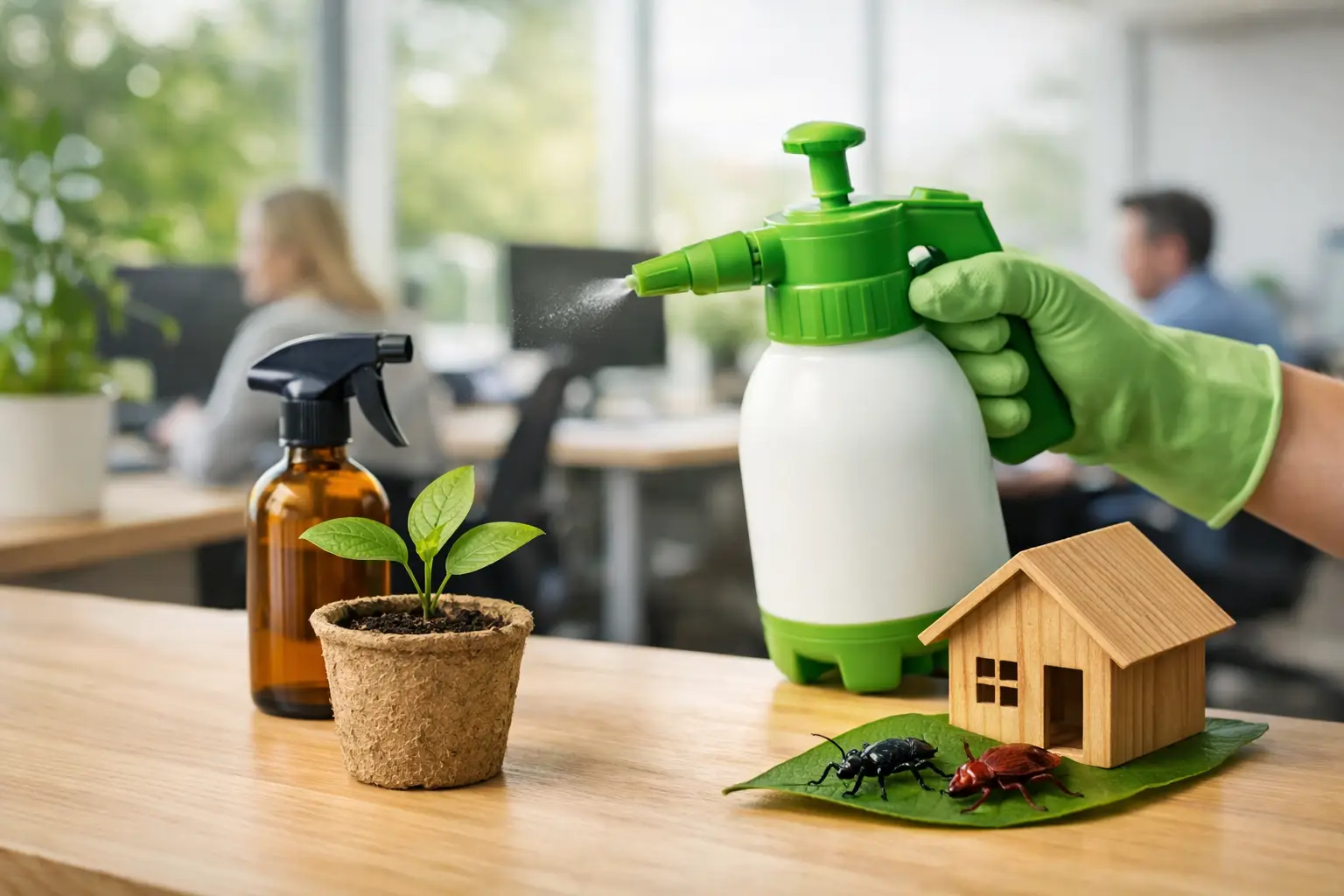
A fruit fly circling a break-room sink, mouse droppings behind a copier, or ants crossing a reception counter can quickly become more than an inconvenience. Green pest control for offices gives facility managers a practical way to stop pest activity while protecting employees, visitors, sensitive workspaces, and the building itself.
The goal is not to use a product labeled “green” and hope for the best. Effective office pest management starts with finding why pests are present, removing the conditions that support them, sealing their access points, and using carefully selected treatments only where they are needed. That approach delivers proven results with less unnecessary exposure and less disruption to daily operations.
What Green Pest Control Means in an Office
Green pest control is an integrated approach built around prevention, inspection, monitoring, exclusion, sanitation, and targeted treatment. It is often called Integrated Pest Management, or IPM. Instead of treating every pest sighting with broad, routine pesticide applications, a trained technician identifies the pest, traces its food, water, shelter, and entry sources, then builds a plan around the actual conditions in the facility.
For an office, that may mean addressing gaps around utility lines, improving waste handling near a loading dock, repairing a leaking kitchenette pipe, or changing how snacks are stored in shared desks. If treatment is necessary, lower-impact options and precise application methods can be used according to the pest, location, and level of activity.
This matters in workplaces where people spend long hours indoors. It also matters for property managers and operations leaders who need reliable documentation, predictable service, and a professional response that does not create avoidable disruption.
Why Office Pests Need More Than a Quick Spray
Offices create ideal pest conditions in ways that are easy to overlook. A single building may include kitchens, vending areas, restrooms, storage closets, server rooms, suspended ceilings, delivery entrances, landscaping, and dumpsters. Each area can create a different pest risk.
Rodents may enter through an opening near a dock door and find food in desk drawers. Cockroaches can thrive around moisture beneath a break-room refrigerator or sink. Ants may follow moisture or food residue indoors, while drain flies and fruit flies develop around neglected drains, organic buildup, and recycling containers.
A quick treatment can reduce visible activity, but it will not correct the conditions that brought pests in. In fact, repeated broad applications without inspection may mask the source of an issue while allowing it to grow behind walls, under equipment, or in storage areas.
A green approach is more deliberate. It focuses on breaking the pest’s life cycle and making the facility less attractive over time. That means fewer surprises, a stronger prevention program, and a cleaner record for businesses that face customer audits or internal safety reviews.
The Core Steps of Green Pest Control for Offices
Start with a detailed inspection
A professional inspection should cover much more than the area where a pest was seen. Technicians should examine exterior entry points, doors, windows, utility penetrations, floor drains, plumbing areas, ceiling voids, break rooms, storage spaces, waste areas, and landscaping conditions near the building.
The inspection should identify pest species whenever possible. Different pests require different solutions. A small ant trail, for example, should not be handled the same way as a German cockroach issue or rodent activity in a wall void. Correct identification prevents wasted effort and supports safer, more effective treatment decisions.
For multi-tenant buildings or larger offices, inspection findings should be documented clearly. Facility teams need to know what was found, where it was found, what was done, and what building or sanitation corrections are still needed.
Remove food, water, and harborage
Pests do not need much to establish themselves. Crumbs under a microwave, an overflowing recycling bin, standing water under a sink, or cardboard stored against a wall can be enough to support activity.
Office staff do not need a complicated sanitation program, but consistency is essential. Food should be kept in sealed containers rather than desk drawers. Break-room counters and appliances need routine cleaning, especially around coffee stations and vending equipment. Trash and recycling should be emptied on a dependable schedule, and spills should be addressed promptly.
Maintenance is equally important. Leaks, condensation, and slow drains create moisture that attracts many pests. Stored materials should be kept organized and, when possible, elevated off the floor to make inspection easier and reduce hiding places.
Close pest entry points
Exclusion is one of the most valuable green pest control measures because it stops pests before they become an indoor problem. Small gaps around pipes, cable lines, vents, door frames, and foundation areas can give insects and rodents a direct route inside.
Door sweeps, weather stripping, screens, seals around utility penetrations, and repairs to damaged exterior materials can make a significant difference. Dock doors deserve particular attention. A door left open during deliveries may be unavoidable, but damaged seals or persistent gaps should be corrected quickly.
Exclusion work depends on the building’s age, design, and use. A downtown office suite, a medical office, and a warehouse-adjacent corporate facility will have different vulnerabilities. The right plan addresses the actual structure instead of relying on a one-size-fits-all checklist.
Monitor activity and use targeted treatments
Monitoring devices, inspection notes, and service reports help show whether activity is improving, shifting, or recurring. This is especially useful for pests that are active at night or remain hidden, such as cockroaches and rodents.
When treatment is needed, targeted methods matter. A technician may use tamper-resistant rodent stations in appropriate exterior or secured locations, insect monitors in discreet areas, precise crack-and-crevice applications, baits, or other pest-specific tools. The treatment method should fit the pest and the space, not simply be the fastest option.
Lower-impact does not mean weaker. It means treatment is selected and applied with purpose. Severe infestations may require more intensive action, particularly when pests threaten sanitation, inventory, wiring, or employee comfort. Even then, an IPM plan should continue to address the source so the problem does not return after the initial service.
Common Office Pest Problems and Prevention Priorities
Rodents are a high-priority concern because they can contaminate surfaces, damage wiring, and create serious employee concerns. Green rodent control relies heavily on exclusion, sanitation, careful monitoring, and strategic placement of secure control devices. The best long-term result comes from locating the route rodents use to enter the building.
Cockroaches require fast, disciplined action. They are often associated with moisture, food debris, clutter, and deliveries or personal belongings that unintentionally introduce them. Detailed inspection, sanitation improvements, monitoring, and targeted treatment are more effective than occasional surface spraying.
Ants often signal a moisture issue or a food source. Cleaning visible trails alone may not solve the problem if the colony remains active in a wall void, under pavement, or near the foundation. A technician should identify the species and determine whether baiting, exclusion, exterior treatment, or moisture correction is the most appropriate next step.
Small flies around sinks, drains, trash, or produce require source removal. Simply killing the adult flies will not eliminate the organic material where larvae develop. Drain cleaning, leak repairs, waste management, and targeted fly control should work together.
What Facility Managers Should Expect From a Service Partner
A dependable office pest program should provide more than a technician visit. It should include scheduled inspections, clear findings, recommendations that the facility team can act on, service records, and responsive support when activity changes.
For businesses with multiple offices, consistency is critical. Standardized documentation and account oversight help ensure each location receives the same level of attention while still allowing for site-specific conditions. This is particularly valuable for organizations that need to demonstrate pest management controls during audits, tenant reviews, or safety meetings.
Ask how the provider handles communication after a pest sighting. Employees may report an issue with limited detail, and managers need a clear process for escalation. Rapid response is important, but so is a plan that explains what caused the issue and what will prevent it from becoming a repeat problem.
Build Prevention Into Daily Operations
The strongest green pest program is a shared effort between the pest management team, cleaning staff, maintenance personnel, and office employees. Staff should know where to report sightings, maintenance should have a process for addressing leaks and gaps, and food-service areas should follow consistent cleaning routines.
Apex Pest Control builds customized commercial plans around those real-world operating needs, combining professional inspection, targeted treatment, prevention guidance, and documentation. The result is practical protection that supports a cleaner, more confident workplace.
A pest-free office is not created by one visit or one product. It is maintained through early reporting, careful building upkeep, and a prevention-first plan that keeps small warning signs from becoming a larger facility problem.