



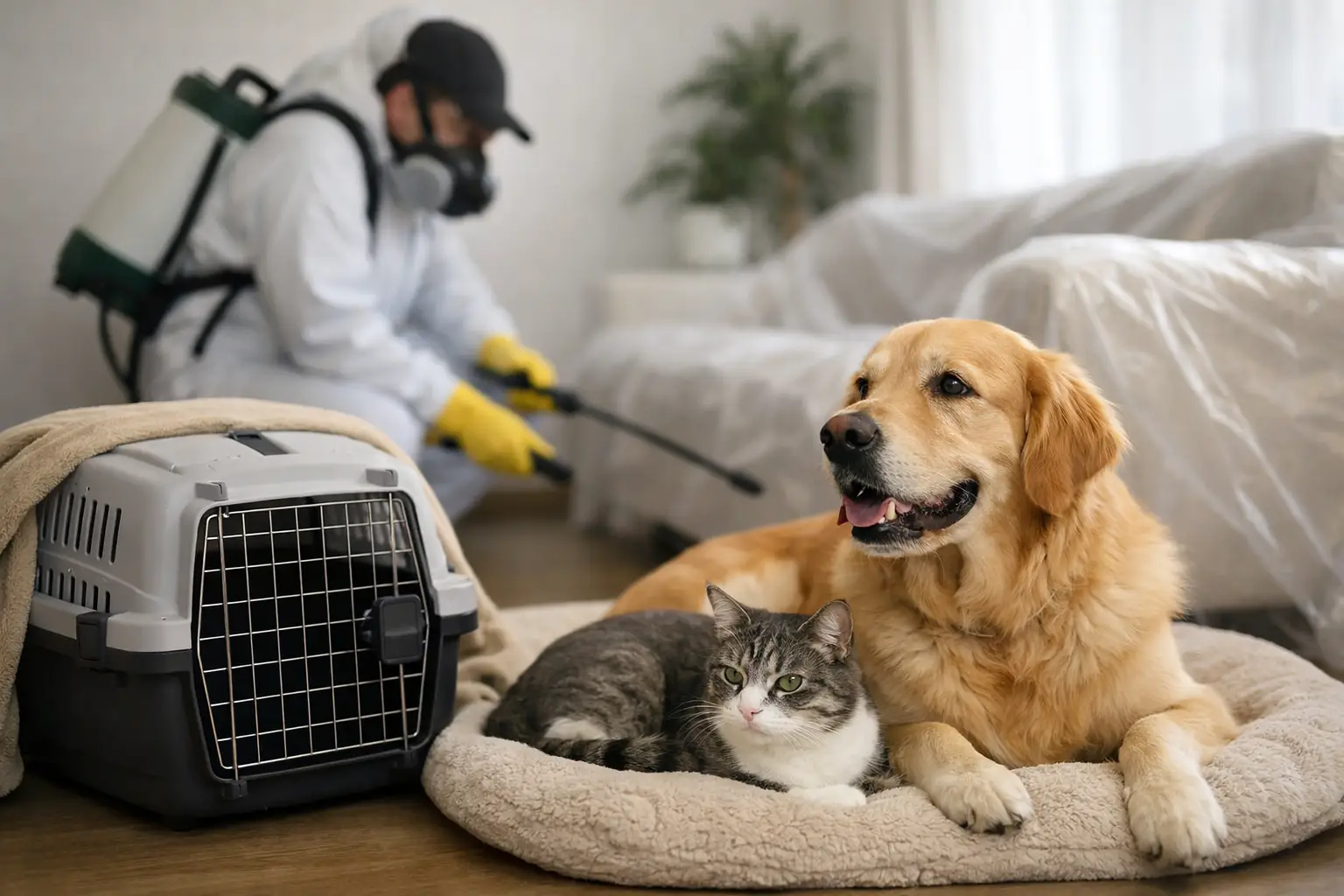
A pest problem can make a home feel urgent, especially when ants are in the kitchen, rodents are in the walls, or stinging insects are near the yard. But fast relief should never come at the expense of your pet’s well-being. Knowing how to protect pets during pest control starts with clear communication, careful preparation, and following the treatment instructions provided by a qualified technician.
Pets are not simply smaller people. Dogs, cats, birds, reptiles, fish, and small mammals can respond differently to pest control materials, scents, and disruptions in their environment. A professional plan accounts for those differences while addressing the pest issue at its source.
Tell Your Pest Control Professional About Every Pet
Before treatment begins, give your technician a complete picture of the animals in and around your home. Mention not only dogs and cats, but also birds, aquariums, reptiles, rabbits, guinea pigs, ferrets, and outdoor animals. Let the technician know where pets sleep, eat, play, and spend time during the day.
This information helps determine the right treatment method, placement, timing, and preparation steps. A targeted treatment for an ant trail may require a different approach than a whole-home plan for bed bugs, fleas, rodents, or cockroaches. The goal is always to use the most effective method with appropriate safeguards for your household.
Be direct about health concerns as well. If a pet is elderly, very young, pregnant, has respiratory sensitivities, or has a medical condition, say so before service. Your veterinarian can also provide guidance for pets with unique health needs.
Remove Pets Before Treatment Starts
The safest default is to keep pets out of treatment areas until your technician confirms it is appropriate for them to return. This prevents accidental contact with products before they have dried, settled, or been secured in their intended locations.
For many indoor treatments, that means taking dogs and cats to a trusted friend’s home, a boarding facility, daycare, or a part of the property that will not be treated. Do not assume a closed bedroom is safe if the service includes nearby rooms, hallways, baseboards, or ventilation areas. Ask the technician which spaces will be treated and whether temporary separation inside the home is acceptable.
Outdoor pets need the same attention. Bring dogs inside, move portable kennels, and keep pets away from lawns, patios, mulch beds, and foundation areas during exterior service. If mosquito or tick treatment is planned, ask specifically about reentry timing for pets that use the yard frequently.
Protect Food, Water, Toys, and Bedding
Pet supplies can collect residues if they are left exposed during service. Before treatment, remove or cover food bowls, water dishes, treats, chew toys, litter boxes, cages, bedding, and blankets. Wash any items that may have been left out unintentionally before returning them to their usual place.
For cats, do not overlook water fountains, scratching posts, and favorite hiding spots. Dogs may carry residue from a treated floor or yard onto furniture, so keep them away until the treated surfaces are ready for normal use. Small pets can be especially vulnerable because they often remain close to floors or enclosed habitat surfaces.
A clean, temporary pet area with fresh water, food, familiar bedding, and a few comfort items can reduce stress while service is underway. Pets often react to the unfamiliar sounds and smells of pest control work, even when no direct exposure occurs.
Follow Reentry Instructions Exactly
One of the most common mistakes homeowners make is bringing pets back too soon. Reentry timing depends on the product used, the treatment area, ventilation, weather conditions, and the type of pest being addressed. There is no single rule that applies to every treatment.
Your pest management professional should provide clear instructions before leaving the property. Follow them precisely, even if a surface appears dry or the odor seems gone. Drying time can vary with humidity, airflow, temperature, and the material treated.
If you are unsure whether a pet can return to a particular room or yard, ask before allowing access. It is better to extend a pet’s temporary stay elsewhere than to guess. Keep written post-treatment instructions where everyone in the household can see them, especially if children, pet sitters, or maintenance staff may enter the area.
Give Special Attention to Fish, Birds, and Reptiles
Aquariums, bird cages, and reptile habitats require extra planning. Fish and birds can be highly sensitive to airborne materials, while reptiles may be affected by changes in temperature, humidity, or nearby product use. A simple cover is not always enough protection.
Tell the technician about these pets when scheduling service, not just on arrival. Depending on the treatment, the safest option may be to relocate the animal or temporarily move the habitat away from the treatment area. For aquariums that cannot be moved, the technician can explain whether equipment should be turned off, covered in a specific way, or protected with additional airflow precautions.
Never spray products directly on cages, tanks, bedding, pet enclosures, or food storage areas unless a veterinarian and qualified pest professional have provided specific direction. This is especially true for flea control, where homeowners may be tempted to treat every surface at once.
Reduce the Need for Repeated Treatments
The best way to protect pets during pest control is to reduce pest pressure before it becomes a major infestation. Prevention allows for more focused service and helps avoid the frustration of repeated emergency treatments.
Start with the conditions pests use to survive. Store pet food in tightly sealed containers instead of leaving bags open in garages, basements, or pantries. Pick up food bowls when practical, clean crumbs and spilled water promptly, and secure trash. Wash pet bedding regularly if fleas are a concern, and inspect pets after time outdoors during tick season.
Outside, keep vegetation trimmed away from the home, correct standing-water issues, and address openings around utility lines, doors, vents, and foundations. Rodents, ants, spiders, and other pests often enter through small gaps that go unnoticed until activity increases.
Professional prevention programs add another layer of protection. Regular inspections can identify entry points, nesting areas, moisture problems, and early signs of activity before pests spread into living spaces. For households with pets, proactive service is often less disruptive than waiting until the problem requires a more intensive response.
Avoid DIY Product Mixing and Misuse
Over-the-counter pest products can create unnecessary risks when they are overapplied, mixed together, or used outside their label directions. Foggers, loose bait, improperly placed traps, and unapproved home remedies can be especially concerning around curious pets.
Do not apply one product simply because another did not work immediately. Pests may require identification, sanitation changes, exclusion work, or a targeted treatment plan rather than additional chemicals. A dog that finds a misplaced rodent bait block or a cat that walks through a wet insecticide application can face a preventable exposure risk.
If you use any pest product yourself, keep the original container and label. Should a pet appear ill after possible exposure, contact your veterinarian or an animal poison control resource right away. Signs can include vomiting, drooling, tremors, coughing, breathing changes, weakness, unusual behavior, or skin and eye irritation. Do not wait for symptoms to worsen.
Choose a Customized, Pet-Conscious Treatment Plan
Effective pest control does not mean treating every room or every inch of a property the same way. It means identifying the pest, understanding where it is active, and selecting the most appropriate control methods. Depending on the situation, that may include exclusion, sanitation recommendations, monitoring devices, carefully placed bait, trapping, targeted application, or eco-friendly and organic options.
At Apex Pest Control, trained professionals build treatment plans around the pest problem, the property, and the people and pets who rely on that space. Ask questions before service begins. A dependable provider should be able to explain what will be treated, what preparations are needed, when pets can return, and what practical steps will help prevent the issue from coming back.
Your pet depends on you to make safe decisions when pests appear. With a clear plan, honest communication, and professional guidance, you can protect your home from pests without sacrificing the comfort and safety of the animals that make it home.