



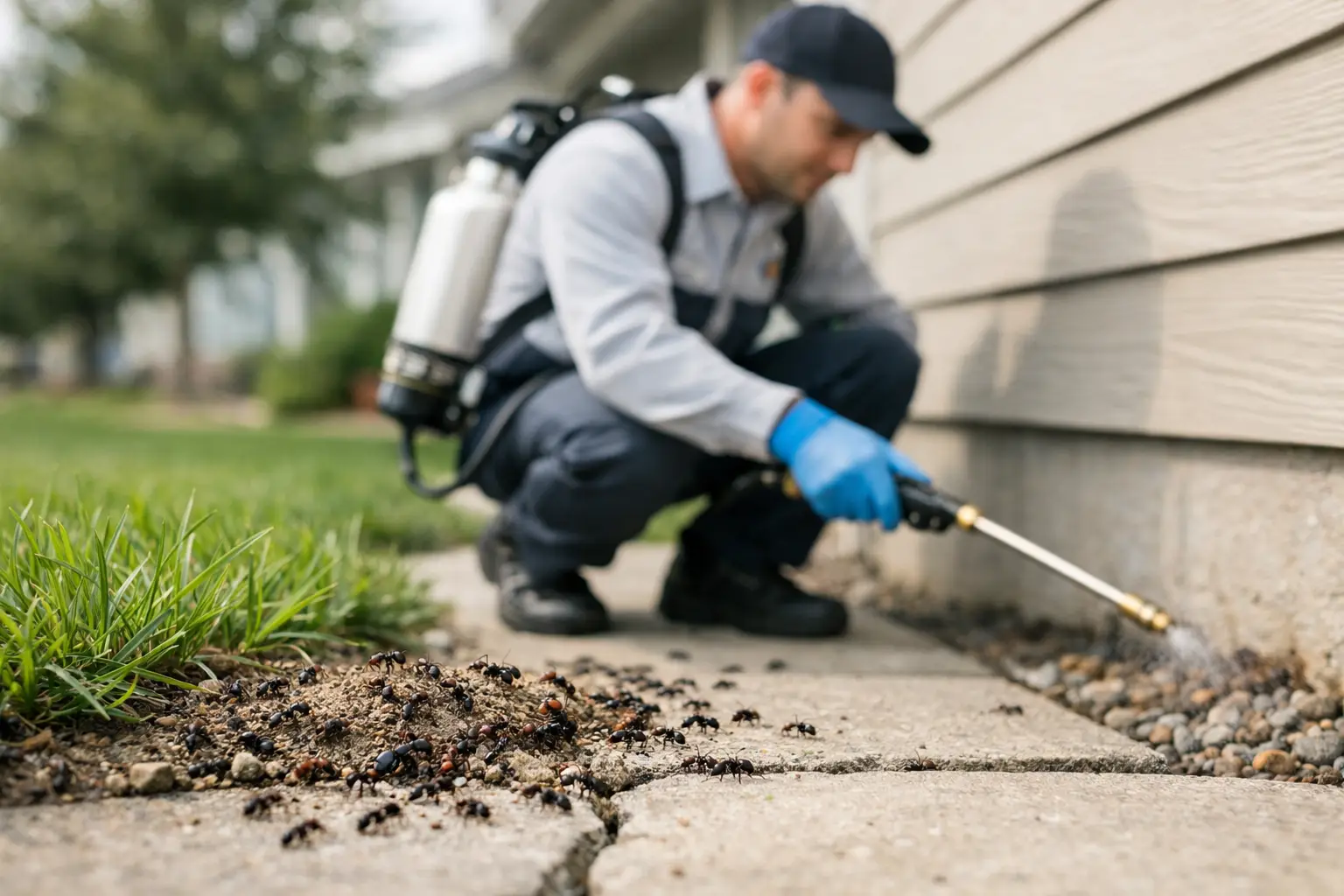
A line of ants crossing a kitchen counter is rarely just a surface problem. It is usually a sign that a colony has found dependable food, water, or shelter nearby – and killing the ants you can see will not necessarily stop the activity. A professional Ohio ant control service focuses on the colony, the entry points, and the conditions that allowed ants to establish a route into your home or facility.
For homeowners, ants can turn kitchens, bathrooms, basements, and patios into a constant source of frustration. For businesses, visible ant activity can affect customer confidence, employee comfort, sanitation standards, and audit readiness. The right response is fast, targeted, and built around lasting prevention rather than a temporary reduction in sightings.
Why Ant Problems Keep Returning
Ants are highly organized foragers. Once a worker ant finds a food or moisture source, it can leave a scent trail that directs other ants to the same location. That is why a few ants near a sink, pet bowl, break room, or trash area can quickly become a steady stream.
Many over-the-counter sprays kill the workers in view but do little to affect the colony. In some cases, disturbing a colony without eliminating it can cause ants to change routes or split into additional nesting areas. This is especially frustrating with certain indoor species, including odorous house ants and pavement ants, which can build nests in wall voids, beneath slabs, around foundations, or under landscaping materials.
Ohio weather also creates favorable conditions for recurring activity. Spring rain, summer heat, and changing fall temperatures can drive ants toward buildings in search of moisture, food, or protected nesting sites. A treatment that works in one season may need a different prevention strategy when conditions change.
What an Ohio Ant Control Service Should Address
Effective ant control begins with identification and inspection. Different ant species have different nesting habits, food preferences, and treatment considerations. A technician should look beyond the trail on the counter to determine where ants are entering, where they may be nesting, and what is sustaining their activity.
A complete service plan typically addresses three connected areas: active ants, the colony or colonies behind them, and the conditions that invite future activity. The exact approach depends on the species, infestation level, building layout, and whether children, pets, food handling, or sensitive operations are present.
Targeted Treatment Instead of Broad Guesswork
Professional treatment may involve carefully placed bait systems, crack-and-crevice applications, exterior perimeter service, and targeted treatments around nesting or entry areas. Baits are often valuable because foraging ants can carry the material back to the colony, helping reach ants that are not exposed to a surface spray.
However, bait is not a one-size-fits-all answer. Some species prefer sweet foods while others are drawn to proteins or grease. Weather, competing food sources, and the maturity of the colony can also affect feeding behavior. A trained technician evaluates these factors and adjusts the plan when needed.
Entry-Point and Moisture Management
Treatment is stronger when it is paired with exclusion and sanitation recommendations. Small gaps around utility lines, doors, windows, foundation penetrations, and siding can provide access. Indoors, leaky plumbing, damp areas beneath appliances, crumbs, unsealed pantry goods, and overflowing trash give ants reasons to return.
You do not need a perfectly sterile home or building to prevent ants. Consistent housekeeping and practical repairs make a meaningful difference, though. Cleaning food spills promptly, storing food in sealed containers, addressing water leaks, and keeping vegetation from touching the structure can reduce the pressure on your pest control program.
Residential Ant Treatment Built Around Your Home
Every home has different risk areas. A family may be seeing ants near a kitchen sink after heavy rain. Another homeowner may notice them emerging along basement walls or entering near a patio door. The best response is not a generic indoor spray. It is a plan that identifies the ant activity, treats it safely and precisely, and protects the areas where the family lives.
At Apex Pest Control, certified professionals develop individualized ant treatment plans based on the conditions at the property. Service can include one-time intervention for an immediate concern or ongoing pest prevention for households that want regular protection through seasonal changes.
Safety remains central to the process. Homeowners should always know what service is being performed, what areas require attention, and what simple steps can support results. When appropriate, treatment options can be selected with consideration for children, pets, and environmental concerns without compromising the need to control the infestation.
When Carpenter Ants May Be a Bigger Concern
Not every large black ant is a carpenter ant, but carpenter ant activity deserves prompt attention. Unlike termites, carpenter ants do not eat wood. They excavate galleries in damp, damaged, or sometimes sound wood to create nesting spaces. Repeated sightings of large ants indoors, piles of sawdust-like material, or activity near moisture-damaged areas may indicate a nesting issue that needs professional inspection.
Carpenter ant control often includes more than treating visible insects. The source of moisture should be identified, exterior conditions should be reviewed, and potential nesting sites around decks, window frames, rooflines, wall voids, or damaged wood should be considered. Early action can help protect the property from more extensive activity.
Commercial Ant Control Requires Documentation and Consistency
For restaurants, offices, warehouses, health care settings, multifamily properties, schools, and other commercial facilities, an ant issue is an operational problem. A single trail in a customer-facing area can lead to complaints. Repeated activity in a food-related environment can raise sanitation concerns. For multi-location organizations, inconsistent service can create unnecessary risk across the portfolio.
Commercial ant management should be structured around the facility’s actual needs. That includes inspection schedules, precise treatment methods, clear service reporting, sanitation and exclusion recommendations, and follow-up when conditions require it. Facilities with compliance obligations may also need documentation that supports internal reviews, third-party audits, or customer requirements.
The trade-off is straightforward: a one-time treatment may resolve a localized issue, but recurring service is often the more dependable choice when a facility has ongoing food, moisture, receiving, landscaping, or tenant-related pressures. A proactive program makes it easier to identify trends before they become visible to customers or inspectors.
What You Can Do Before Your Service Visit
A few practical details can help your technician diagnose the issue faster. If possible, note where ants are appearing, what time of day activity is highest, and whether you have seen ants outside near the foundation, mulch, pavement cracks, or utility areas. Avoid spraying over active trails immediately before an inspection if you can. The trail can provide useful information about the ants’ route and behavior.
Indoors, clear accessible areas around sinks, appliances, and locations where ants have been seen. Do not move furniture or take apart fixtures unless advised. In commercial settings, staff should report sightings consistently instead of handling each occurrence with unrelated store-bought products. A clear record of locations and timing helps identify the source.
Choose Control That Goes Beyond the Trail
The goal of ant control is not simply to make the counter look clear for a day. It is to eliminate active colonies where possible, reduce the conditions that support ant activity, and put dependable prevention in place for the season ahead.
Whether you are dealing with recurring kitchen ants in a Northeast Ohio home or an ant issue affecting a busy commercial property, professional help provides a clearer path than repeated trial-and-error treatments. Prompt inspection and a customized plan can restore comfort, protect your reputation, and give you peace of mind when the next warm-weather ant season arrives.