



TL;DR:
- Proper sanitation after pest removal eliminates biological and chemical hazards and prevents reinfestation.
- Homeowners should follow specific timing and cleaning protocols based on pesticide re-entry intervals.
- Professional guidance ensures thorough cleanup, reducing health risks and protecting long-term home hygiene.
Most Ohio homeowners breathe a sigh of relief once the exterminator leaves. The pests are gone, so the problem is solved, right? Not quite. What many people don’t realize is that the work isn’t finished when the treatment ends. Pesticide residues, pest droppings, and biological contaminants can linger on your surfaces long after the bugs or rodents are removed. Without proper sanitation, your family and pets remain at risk, and new infestations can take hold faster than you’d expect. This guide walks you through exactly why cleaning after extermination matters and how to do it safely.
Table of Contents
- Why pest removal is only the first step
- Key hazards remaining after pest removal
- Timing your post-extermination cleaning for best results
- Efficient and safe cleaning methods post-pest removal
- Why most homeowners underestimate post-pest cleaning
- Get expert help for safe pest removal and cleanup
- Frequently asked questions
Key Takeaways
| Point | Details |
|---|---|
| Post-removal cleaning is essential | Sanitizing after pest removal protects your family from lingering residues and pathogens. |
| Follow timing guidelines | Waiting for the proper interval ensures treatment effectiveness and safety. |
| Use safe cleaning methods | Non-toxic products and efficient protocols reduce risks for children and pets. |
| Target risk areas | Special care is needed in kitchens and food storage zones to meet Ohio regulations. |
| Professional help offers peace of mind | Experts handle post-removal sanitation with proven safety and thoroughness. |
Why pest removal is only the first step
Think of pest extermination like surgery. The procedure removes the problem, but recovery and aftercare determine whether you actually heal. Killing the pests is the critical first move, but it doesn’t wipe away the damage they left behind.
When pests move through your home, they leave more than just a nuisance. Cockroaches deposit fecal matter and shed skin on counters and inside cabinets. Rodents urinate along baseboards and in wall voids. Even ants and bed bugs can leave behind biological material that irritates skin and triggers allergies. The pests may be gone, but their traces are not.
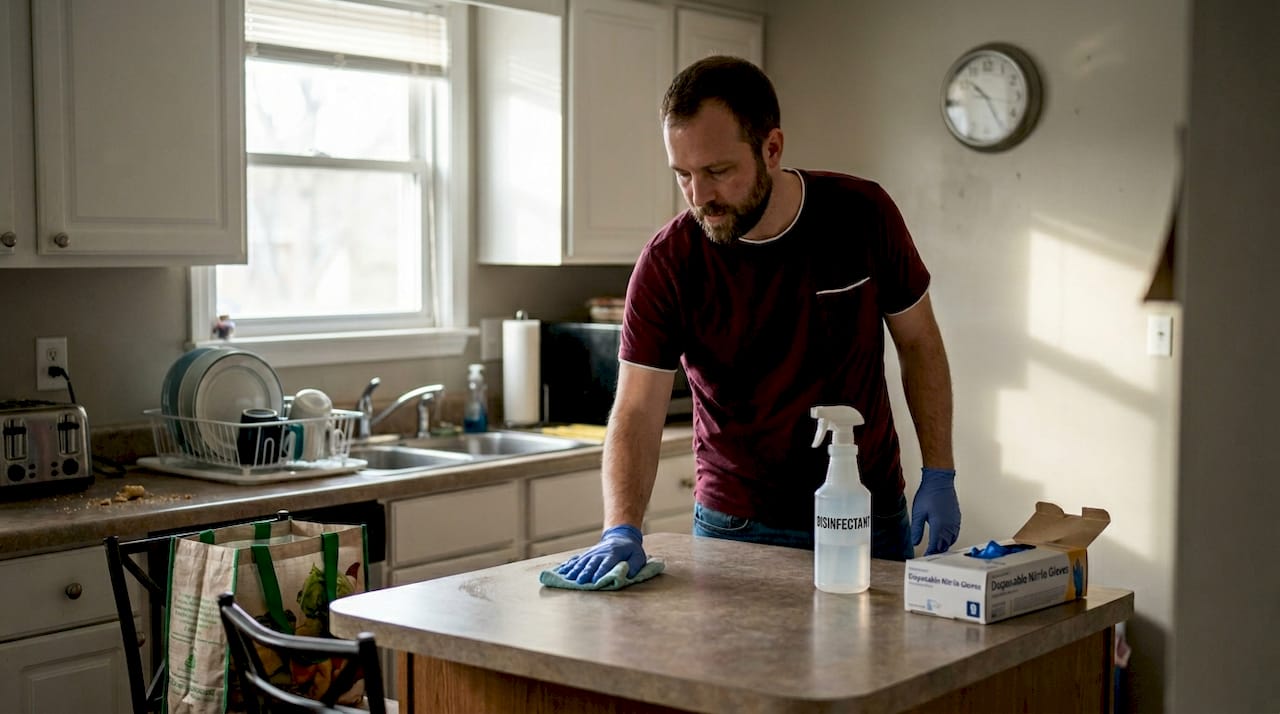
Pesticide residues are another concern many homeowners overlook. Sanitization after pest removal removes pesticide residues from surfaces to minimize family and pet exposure to chemicals. That means wiping down treated areas after the recommended waiting period is not optional. It’s a direct health measure.
Skipping sanitation after pest control also creates conditions that invite pests right back. Crumbs, grease, moisture, and organic debris are what attracted them in the first place. If those food sources remain after treatment, a new colony can establish itself within weeks.
In Ohio, food service businesses and licensed facilities are required to sanitize after pest treatment to comply with health regulations. But even for residential homeowners, the same logic applies. Your kitchen is a food preparation area, and it deserves the same standard of care.
Here’s a quick look at what typically remains after pest removal:
- Pesticide residues on floors, counters, and baseboards
- Rodent droppings, urine trails, and nesting material
- Cockroach fecal smears and shed exoskeletons
- Bed bug casings and fecal spots on mattresses and furniture
- Dead insects and larvae in wall voids or under appliances
Removing pests without sanitizing afterward is like mopping a floor without wringing out the mop. You’re spreading the problem around, not solving it.
Review post-extermination cleaning tips to understand what a thorough cleanup involves before you start.
Key hazards remaining after pest removal
Not all post-pest hazards are equal. Some are chemical, some are biological, and the level of risk depends heavily on which pest was treated and where in your home the infestation occurred.
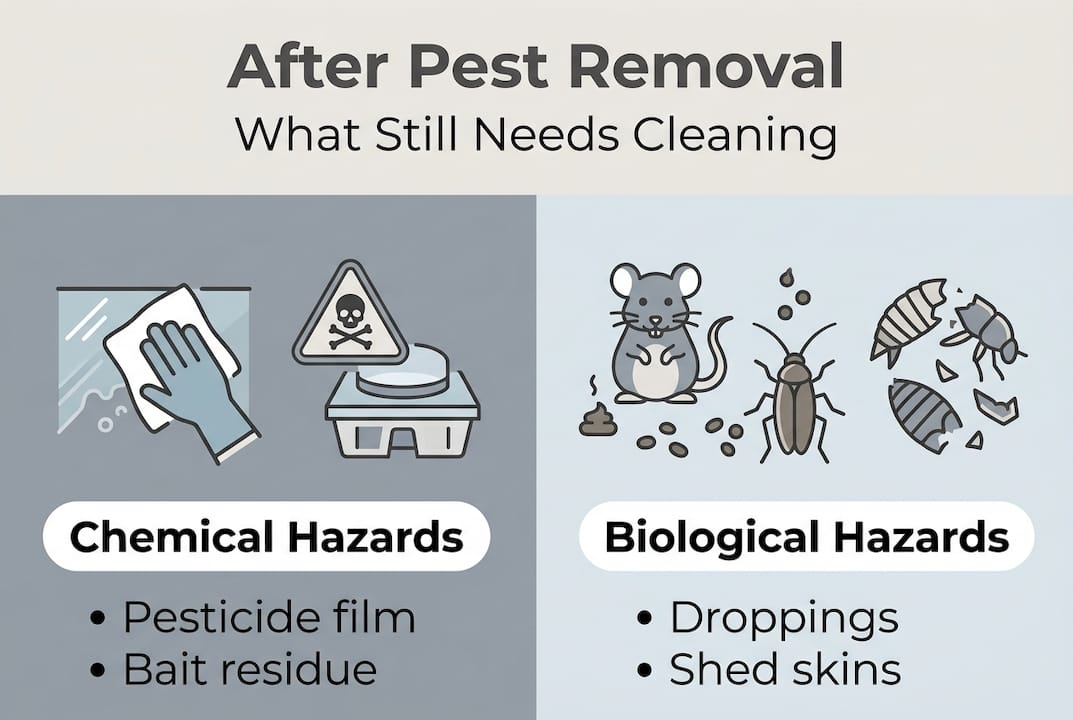
Chemical hazards come from the pesticides themselves. Children and pets are especially vulnerable because they spend more time on floors and low surfaces where residues settle. Even low-level, repeated exposure can cause irritation, respiratory issues, or worse over time.
Biological hazards are often more serious and less visible. Rodent droppings and urine can carry dangerous pathogens including hantavirus, and food areas in Ohio must sanitize per health regulations to prevent contamination. Hantavirus is transmitted through disturbed rodent waste, which is why vacuuming up droppings without proper precautions is actually dangerous.
Here’s a comparison of hazard types and the appropriate response:
| Hazard type | Source | Risk level | Cleaning approach |
|---|---|---|---|
| Pesticide residue | Treated surfaces | Moderate | Wipe with non-toxic cleaner after REI |
| Rodent droppings | Rodent infestation | High | Wear gloves/mask, disinfect, bag and dispose |
| Cockroach debris | Roach infestation | Moderate | Vacuum, then sanitize with disinfectant |
| Bed bug casings | Bed bug treatment | Low to moderate | Vacuum mattress, wash all bedding hot |
| Pest gel/bait residue | Bait stations | Low | Do NOT clean until treatment is complete |
One mistake homeowners make is cleaning too aggressively and too soon. Wiping away pest control gels or bait stations before the treatment cycle is complete removes the very product that’s still working. Preparing your home for treatment includes knowing which areas to leave untouched during the active treatment phase.
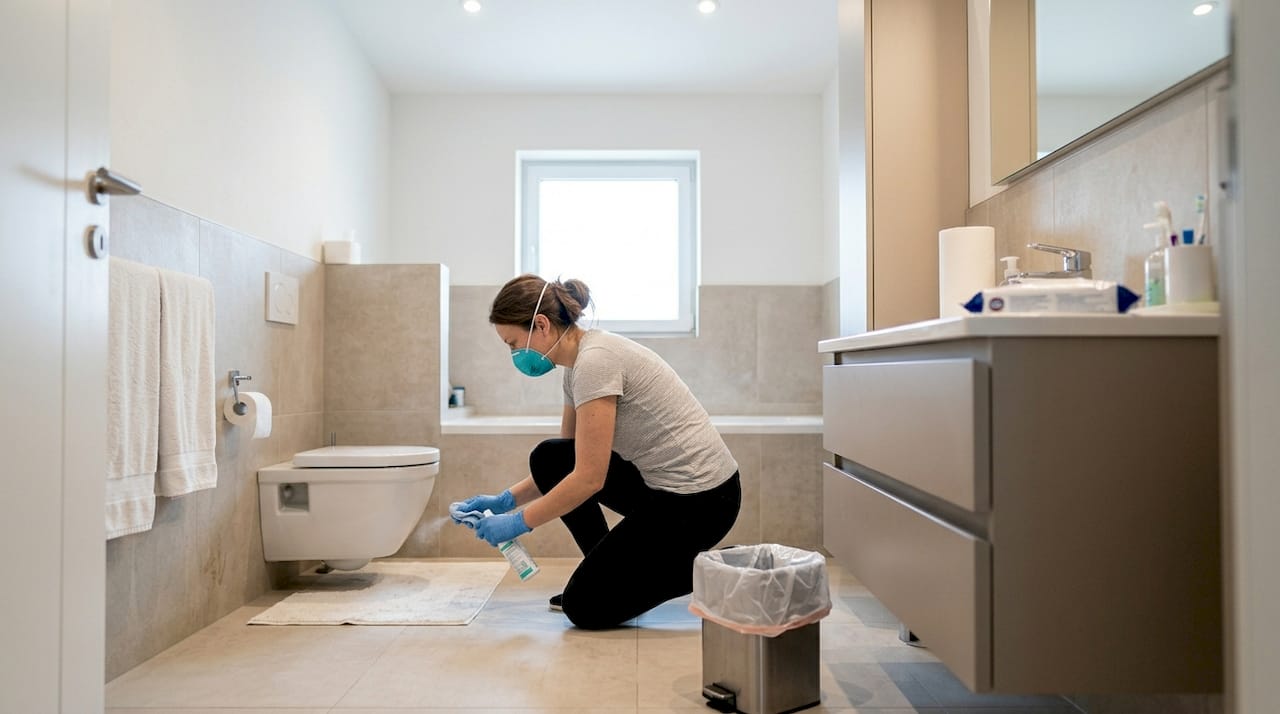
For safe cleaning after rodents, always wear disposable gloves and an N95 mask. Wet the droppings with a disinfectant spray before wiping, never dry sweep or vacuum without a HEPA filter. Seal waste in a plastic bag and dispose of it immediately.
Pro Tip: If you’re unsure whether a surface was treated with bait or spray, call your pest control provider before cleaning. Disturbing an active bait station can reset weeks of treatment progress.
Kitchens and bathrooms need the most attention after treatment. These are the areas where pests concentrate, where food is prepared, and where moisture supports bacterial growth. Treat them last in your cleaning sequence so you don’t cross-contaminate areas you’ve already cleaned.
Timing your post-extermination cleaning for best results
Timing is one of the most misunderstood parts of post-treatment care. Clean too soon and you compromise the treatment. Wait too long and you leave your family exposed to residues and pathogens. The balance matters.
Every pesticide product has a re-entry interval (REI), which is the amount of time you must wait before re-entering treated spaces or cleaning surfaces. This is printed on the product label. Typical REI ranges from 4 to 48+ hours depending on the product and application method. Your pest control technician should tell you this number directly.
The timing of cleaning decisions directly affects both treatment success and your family’s safety. It’s not a matter of preference. It’s a protocol.
Here’s a practical cleaning sequence to follow once the REI has passed:
- Ventilate first. Open windows and doors for at least 30 minutes before you start cleaning. This reduces your exposure to any airborne residues.
- Start with living spaces. Wipe down hard surfaces in bedrooms and living rooms with a damp cloth using a non-toxic cleaner.
- Move to storage areas. Clean closets, pantries, and utility rooms. Discard any food items that were exposed and not properly sealed.
- Clean bathrooms. Scrub sinks, toilets, and tile surfaces. Replace any items stored under the sink that may have been near treated areas.
- Finish with the kitchen. This is the highest-risk zone. Wipe all counters, clean inside cabinets, and sanitize the refrigerator exterior and handles.
- Wash all soft surfaces. Bedding, curtains, and rugs should be laundered on a hot cycle if they were in treated rooms.
One important note: do not disturb pest control gels or bait stations during this process. These are typically placed in corners, under appliances, or inside cabinets. Leave them in place unless your technician has confirmed the treatment cycle is complete.
For post-treatment follow up advice, check with your provider about whether a follow-up inspection is needed before you fully restore the treated areas to normal use.
Efficient and safe cleaning methods post-pest removal
Once you’ve waited the appropriate time and you’re ready to clean, the products and methods you use matter just as much as the timing.
Non-toxic cleaners are the right choice for post-treatment sanitation. Strong chemical cleaners can react with pesticide residues and create new hazards. Stick to diluted dish soap, white vinegar solutions, or EPA-approved non-toxic disinfectants. These are effective against bacteria and safe for your family.
Following product label REI guidelines and using non-toxic cleaners post-wait is the standard approach recommended by pest management professionals. Integrated pest management (IPM) frameworks also emphasize sanitation as a core prevention tool, not just a post-treatment step.
Here’s a quick reference for cleaning by room type:
| Room | Priority | Recommended cleaner | Special notes |
|---|---|---|---|
| Kitchen | High | Non-toxic disinfectant | Clean inside all cabinets and drawers |
| Bathroom | High | Diluted vinegar or non-toxic spray | Focus on under-sink areas |
| Bedroom | Moderate | Damp cloth, mild soap | Wash all bedding on hot cycle |
| Living room | Moderate | Damp cloth | Wipe baseboards and window sills |
| Garage/storage | Low to moderate | Non-toxic spray | Check for nesting material in corners |
For items that were heavily contaminated, disposal is sometimes the safer choice. Cardboard boxes, paper bags, and fabric items that rodents nested in should be bagged and thrown out rather than cleaned.
Pro Tip: After your initial post-treatment clean, set a monthly cleaning routine that targets the areas where pests were found. Consistent sanitation is the most effective long-term prevention tool available.
For IPM for long-term prevention, the goal is to make your home consistently inhospitable to pests through cleanliness, moisture control, and sealing entry points. Cleaning isn’t a one-time event after treatment. It’s an ongoing practice.
Review this step by step post-cleaning guide to make sure you haven’t missed any critical areas in your home. And use cleaning as prevention as your long-term framework going forward.
Why most homeowners underestimate post-pest cleaning
After more than 50 years serving Ohio homeowners, we’ve seen a consistent pattern. People invest in professional extermination, then skip the sanitation steps because they feel the hard part is done. It’s an understandable reaction, but it’s also the reason many homes see repeat infestations within a season.
DIY cleaning after pest removal often misses the biological hazards entirely. Most people don’t know to wet rodent droppings before wiping them, or that disturbing dry fecal matter releases airborne particles. Professional protocols account for these details because they’re built on verified safety standards, not guesswork.
The uncomfortable truth is that extermination without sanitation is an incomplete job. It removes the visible problem while leaving behind the conditions that allowed it to develop. Safe post-removal practices address both the pests and the environment they created. That’s the standard your family deserves, and it’s the one we hold ourselves to.
Get expert help for safe pest removal and cleanup
At Apex Pest Control, we’ve been helping Ohio homeowners handle pest problems safely since 1969. We don’t just remove the pests. We guide you through the full process, including what to clean, when to clean it, and how to keep your home protected long after treatment ends.
Our team specializes in rodent pest extermination and follows strict safe rodent cleaning protocols to address biohazards properly. Whether you’re dealing with rodents in the kitchen, bed bugs in the bedroom, or cockroaches near food prep areas, we bring the expertise to handle it right. Ohio homeowners can request a free quote today and get a clear plan for safe, thorough pest removal and cleanup.
Frequently asked questions
How soon can I sanitize after pest extermination?
Wait until the re-entry interval (REI) listed on the product label, usually 4 to 48+ hours before cleaning, to avoid disrupting active treatments and reducing your chemical exposure.
What cleaning products are safe to use after pest treatment?
Use non-toxic cleaners such as diluted dish soap or vinegar solutions after waiting the recommended interval. Sanitization removes pesticide residues from surfaces and reduces exposure for children and pets.
Is it risky not to sanitize after pest removal?
Yes. Skipping sanitation leaves harmful residues and biological contaminants in place. Rodent infestations carry hantavirus risk, and Ohio food areas must sanitize per health regulations to prevent contamination.
Should I sanitize even after organic pest treatments?
Yes. Even organic treatments can leave residues, and sanitation removes conditions that attract new pests. IPM frameworks emphasize sanitation as an ongoing prevention strategy, not just a post-chemical step.
How do I clean safely if children or pets are present?
Ventilate the space first, use non-toxic cleaners, and keep children and pets out of treated areas until cleaning is complete. Removing pesticide residues from surfaces is the most direct way to protect vulnerable household members.