



A termite problem is rarely visible until it has had time to cause damage. That is why choosing between termite baiting vs liquid barriers is not simply a question of treatment preference. It is a decision about how quickly you need protection, how your property is built, where termite activity is occurring, and what ongoing prevention should look like.
For homes and commercial properties in Ohio, subterranean termites are the primary concern. These pests travel underground, enter through small cracks around foundations and utility lines, and feed on structural wood from the inside out. A qualified inspection should determine whether bait stations, a liquid treatment, or a combination of both offers the strongest path to control and peace of mind.
Termite Baiting vs Liquid Barriers: The Core Difference
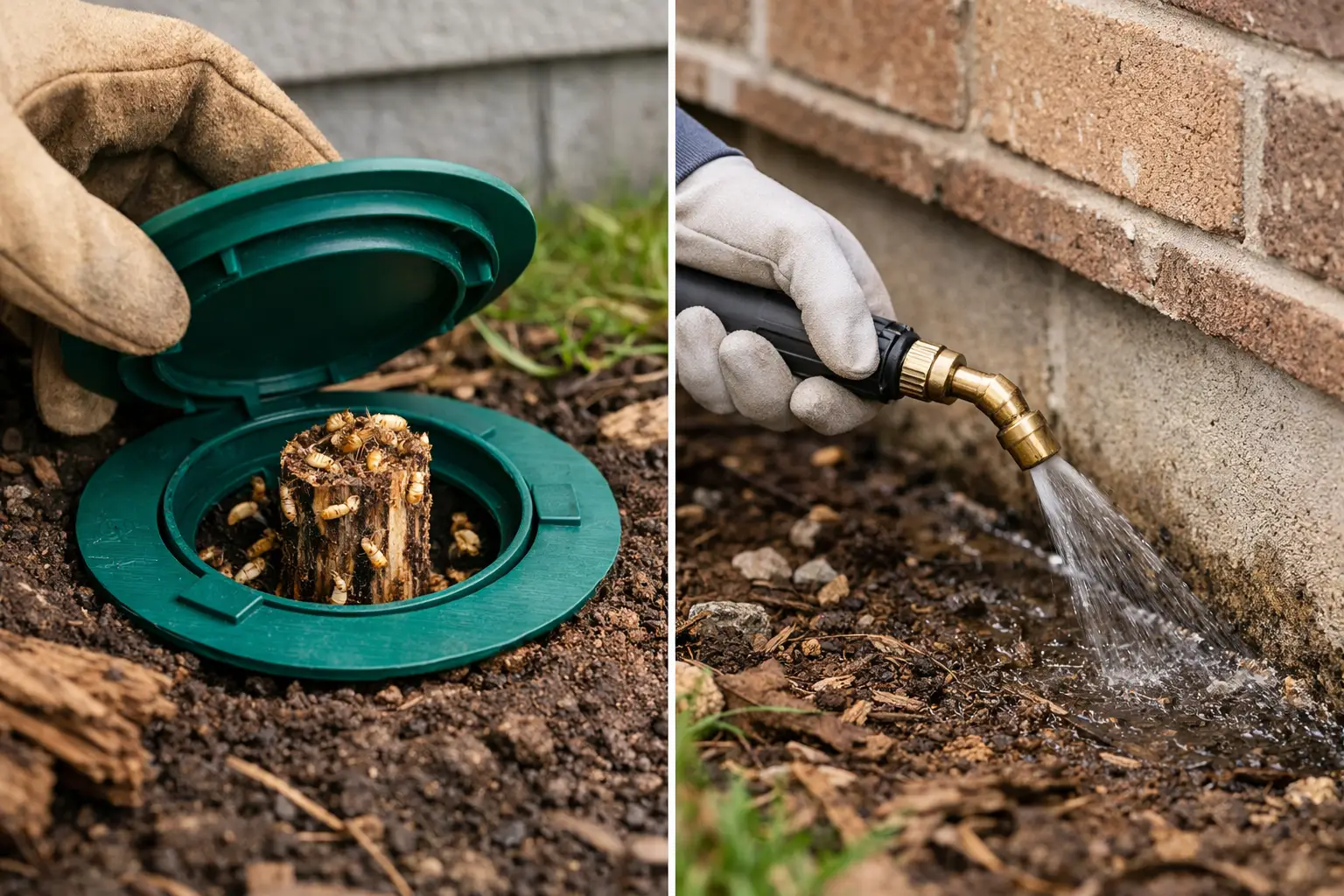
A liquid termite barrier is applied to the soil around and, when necessary, beneath a structure. Modern non-repellent products are designed so termites cannot easily detect the treatment. As termites travel through treated soil, they transfer the active ingredient within the colony, helping reduce the population while protecting the structure.
A termite baiting system uses discreet stations installed in the ground around the building. Technicians inspect those stations on a scheduled basis. When termites begin feeding in a station, a bait material is introduced that interferes with their ability to grow and survive. Worker termites share it with others in the colony over time.
Both methods are proven professional tools. The better option depends on the property, the level of activity, site conditions, and the owner’s preference for immediate treatment coverage versus a monitored system.
How Liquid Termite Barriers Protect a Property
Liquid barriers are often selected when a property needs immediate, broad protection around its foundation. A technician applies a precisely measured treatment to the soil along exterior foundation walls. Depending on the construction and termite activity, treatment may also involve targeted applications in crawl spaces, expansion joints, plumbing penetrations, or areas beneath concrete slabs.
The goal is not to create a visible wall around the house. The goal is to establish a continuous treated zone where termites are likely to travel. Because subterranean termites depend on the soil for moisture and access, a properly installed barrier can intercept them before they reach vulnerable wood.
When a liquid barrier is often the stronger choice
A liquid treatment can be especially practical when an inspection finds active termites entering a known area, such as a basement wall, crawl space, porch support, or attached garage. It is also a strong option when there are conditions that allow technicians to create reliable treatment coverage around the structure.
For a homeowner facing active damage, the speed of a liquid treatment can be reassuring. It addresses the affected area and the surrounding soil right away rather than waiting for foraging termites to find a bait station. Commercial properties may also prefer this approach when a facility needs prompt corrective action after a termite finding.
That said, installation quality matters. Patios, driveways, additions, landscaping, finished basements, and inaccessible foundation areas can complicate treatment. A professional may need to drill through concrete or make carefully placed applications to reach the soil beneath. The right treatment plan should explain where work is needed, why it is needed, and how the area will be restored afterward.
How Termite Baiting Systems Work
Bait systems take a different approach. Instead of treating the soil continuously around the foundation, they place monitored feeding opportunities in the termites’ foraging zone. Termites do not follow a predictable straight line, so stations are positioned strategically around the property and checked by trained technicians.
Once termites are feeding, the bait is designed to move through the colony gradually. This can be valuable because the treatment reaches beyond the individual termites found near the building. It may affect the colony supporting that activity, although timing varies based on termite foraging patterns, colony size, weather, and how quickly termites discover and feed on the bait.
When baiting makes sense
Baiting can be a practical choice for properties where a full liquid treatment would be disruptive or difficult to install. For example, extensive hardscaping, drainage features, nearby water concerns, or construction details may make a station-based program attractive. It also provides a structured monitoring program after the immediate concern has been addressed.
For property owners who value ongoing termite surveillance, bait systems offer a clear advantage. Stations are not a set-it-and-forget-it product. They require regular inspections, accurate records, and timely bait replacement when activity is found. That recurring oversight can identify termite pressure before visible damage appears.
The trade-off is patience. Bait stations must be found by termites before bait can be consumed. They are highly effective when professionally monitored, but they do not provide the same immediate soil coverage as a properly installed liquid barrier.
Speed, Maintenance, and Disruption
The most useful comparison is not which method is universally “better.” It is which one fits the risk at your property.
A liquid barrier generally offers faster immediate protection because treatment is placed directly into likely termite travel zones. It may require more intensive installation work, especially around slabs or structural features that block access to the soil. After installation, follow-up needs vary by product, warranty terms, and site conditions.
Baiting usually involves less disruption during the initial installation. Stations are installed in the soil around the structure, and inspections continue at set intervals. The maintenance commitment is higher because monitoring is central to how the system works. Skipped inspections can leave activity undetected or delay the introduction of bait.
Cost should also be evaluated beyond the first visit. A lower initial price does not always mean lower long-term expense. Compare the full scope of service, including inspection frequency, treatment coverage, documentation, retreatment terms, and the provider’s response process if termite activity is discovered.
Why Some Properties Need Both
In some cases, the strongest termite strategy is layered. A technician may recommend a targeted liquid treatment where active termites are entering the structure, followed by bait stations for long-term monitoring around the property. This approach can provide immediate control in a high-risk area while maintaining surveillance for future termite pressure.
A combined plan is particularly worth discussing when there is confirmed indoor activity, a history of termite damage, multiple structures on the property, or conditions that make a complete liquid application difficult. The recommendation should be based on inspection findings, not a one-size-fits-all sales pitch.
For commercial facilities, the right plan may also depend on operational requirements. Property managers and facility leaders often need service documentation, consistent inspection schedules, clear corrective-action records, and dependable communication across one or several locations. Termite prevention is not only about protecting wood. It is also about protecting the building asset, avoiding disruption, and maintaining confidence among tenants, employees, and customers.
What a Professional Termite Inspection Should Identify
Before choosing a treatment, a thorough inspection should look beyond a single damaged board. Technicians should evaluate accessible foundations, crawl spaces, basements, utility entry points, wooden elements near soil, moisture conditions, and signs of past or active infestation.
Common evidence includes mud tubes on foundation walls, soft or hollow-sounding wood, damaged trim, discarded wings from swarming termites, and moisture issues that make the structure more appealing to termites. Not every sign confirms a current infestation, but each one deserves professional attention.
The inspection should also consider conditions that increase risk. Wood mulch placed heavily against the foundation, poor drainage, leaking spigots, firewood stored near the home, and wood-to-soil contact can all create favorable conditions. Correcting these issues supports treatment, but it does not replace professional termite control when activity is present.
Choosing Protection for an Ohio Home or Business
Ohio’s seasonal weather, moisture changes, and mix of older and newer construction make professional inspection especially valuable. A historic home with a stone foundation presents different challenges than a newer home on a slab. A retail center, apartment community, warehouse, or office campus requires a plan that accounts for access, scheduling, documentation, and ongoing risk.
Apex Pest Control develops termite treatment plans around the property rather than forcing every situation into one method. Certified professionals can identify the extent of activity, explain whether baiting, liquid barriers, or a layered approach is appropriate, and perform the work with attention to people, pets, property, and the environment.
If you have seen possible termite evidence or want to protect a property before damage begins, schedule a professional inspection. The best time to choose a termite plan is before a small hidden problem becomes a major repair.